Bordeaux is one of those cities that keeps revealing itself the more time you spend in it. If you are searching for things to do in Bordeaux and only have a weekend to work with, knowing where to focus makes all the difference.
After several trips and years of living here, the same places keep delivering. The mirror pool at dusk. The Garonne at apéro hour. The Chartrons on a Saturday morning when the market is still setting up. These are the building blocks of any worthwhile visit, and they are all here.
Most guides give you the same circuit in a slightly different order. This one is written by someone who moved to Southwest France and has spent years working out which parts of the standard Bordeaux itinerary actually deliver and which ones you can cut without missing anything. There are also a few things most guides overlook entirely, or mention in passing without giving you enough to actually act on.
The landmarks are still here because they earn their place. Miroir d’eau, Capucins market, the Garonne walk. But this guide tells you how to do them without wasting your best hours, where the tourists pile up and how to avoid them, and how to spend two days in Bordeaux the way people who actually live here would.
Where Is Bordeaux?
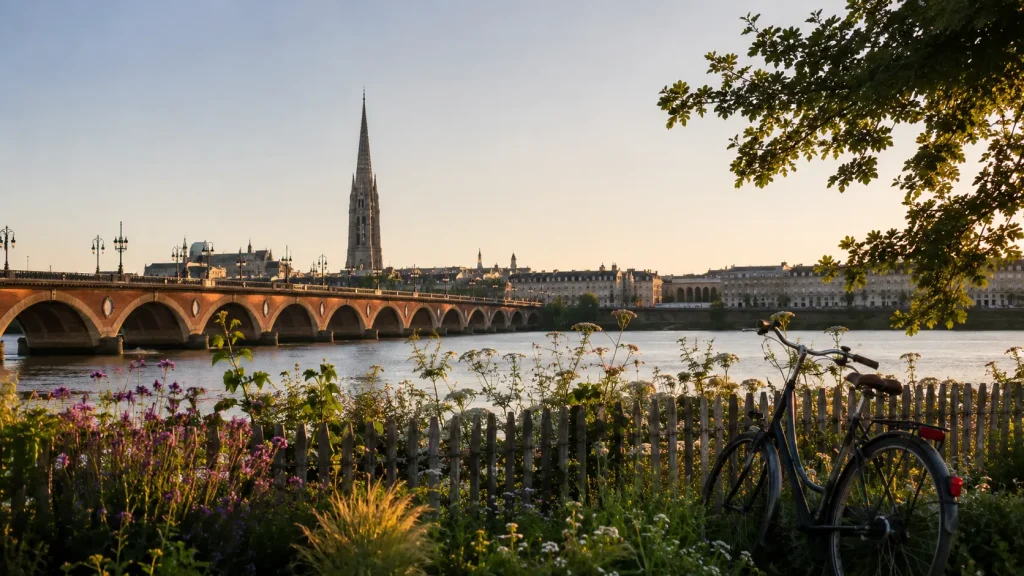
Bordeaux sits on the Garonne in Southwest France, two hours from Paris by TGV. It holds the title of wine capital of the world and has more protected buildings than any French city except Paris, a status confirmed in its UNESCO World Heritage listing: 347 listed monuments, if you want to put a number on it. None of that is what makes it one of the best weekend destinations in Europe, though. It’s the combination: the food scene has become genuinely serious over the last decade, the riverfront is one of the most walkable in France, and the city is small enough to feel familiar by the second morning.
Two days is enough to cover the city properly, and not a rushed version of it.
If you can extend to a third day, Saint-Émilion for vineyards and Arcachon for the Atlantic coast are both easy trains from the city.
How Do You Get Around Bordeaux?
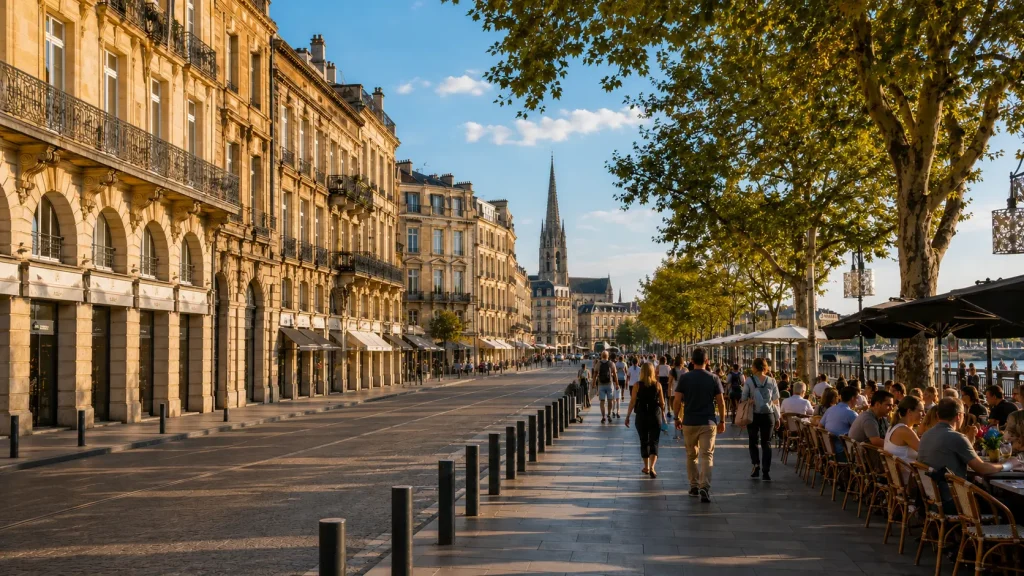
You do not need a car in Bordeaux. In fact, bringing one would actively make your visit worse. Parking is expensive, the historic centre is largely pedestrianised, and every time I have driven in I have regretted it within ten minutes.
The best way to explore is on foot. I walked this route last spring and the city moves at a pace that rewards it. We always stop for a coffee and croissant at a small place just off the main drag near the cathedral, the kind of spot where tables spill onto the pavement, locals outnumber tourists, and nobody is in any hurry. It sets the tone for the day better than any itinerary could. From there the streets are quiet enough in the morning to actually look up at the architecture, and by the time you reach the Garonne the light off the river makes the walk feel worth the trip on its own.
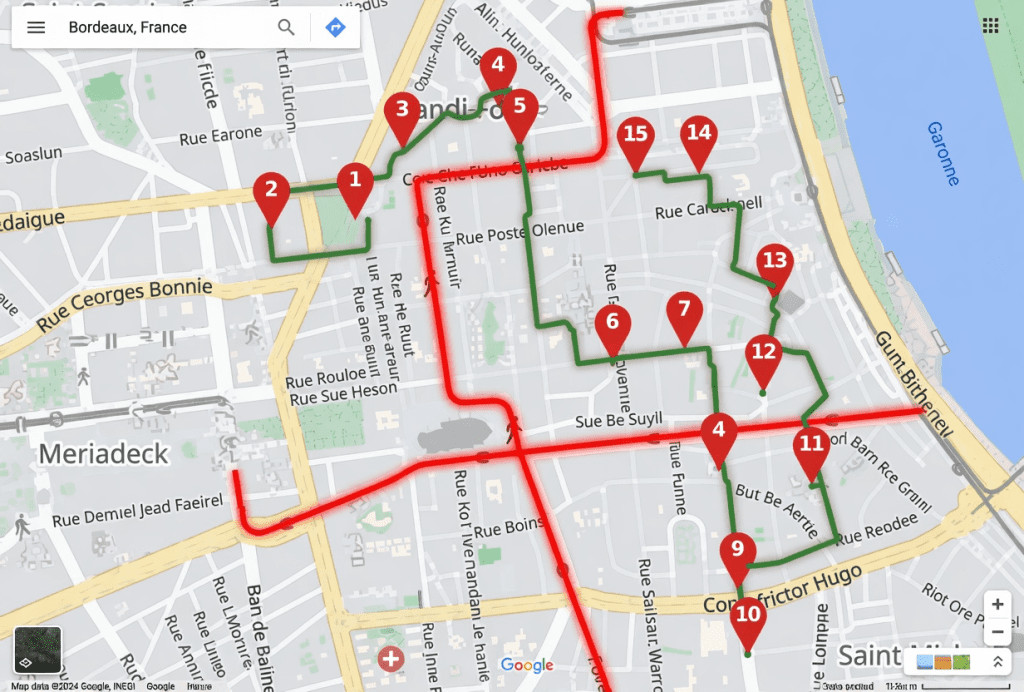
The tram covers what walking does not. Line A runs east-west through the historic centre and crosses to the right bank. Line B connects the centre to Chartrons and north to the Cité du Vin. A 24-hour pass from the machines at the stop works out cheaper than two single tickets.
For day trips, the train is always the answer. Saint-Émilion is 40 minutes and under €10 return. Arcachon is an hour. Both leave from Gare Saint-Jean regularly and neither requires any planning beyond showing up.
If you are staying at Longeveau in the Charente, Bordeaux makes a natural two-day extension just 1.5 hours from the estate. A Bordeaux City Pass covers the Cité du Vin, tram access, and a handful of other sites, worth it if you are visiting two or more paid attractions, less so if you are spending most of your time on foot.
When to Go To Bordeaux
April to June and September to October are the most reliable windows to visit Bordeaux. Spring sees average daytime temperatures rise from around 17°C in April to 24°C by June, with rainfall steadily decreasing and daylight stretching past 9pm by early summer. The city is at its best in late May and early June: long evenings, terraces at near full capacity, and riverfront footfall increasing without reaching peak congestion. Hotel occupancy typically climbs above 70% during this period, but remains below the summer peak, so availability and pricing are still manageable.
July and August are viable but come with trade-offs. Average highs sit between 27°C and 30°C, and heat along the Garonne can push perceived temperatures well above that between midday and 4pm. This is also peak tourist season, with visitor numbers rising by as much as 40% compared to spring. Cruise traffic and day tours into the historic centre increase significantly, and queue times at major attractions can double. While the atmosphere is lively, some of the market and old town experiences lose their ease due to crowd density.
September marks the start of the grape harvest across Bordeaux’s wine regions, which span over 110,000 hectares and produce roughly 5–6 million hectolitres annually. This is one of the most culturally significant periods in the region, with many estates operating at full capacity. If you are planning to visit châteaux or vineyards, this is the optimal time, as harvest activity is visible and the surrounding countryside is at its most dynamic. October continues to offer mild weather, typically around 20°C, with fewer crowds and strong availability across tours and restaurants.
January through March is the quietest stretch. Daytime temperatures average between 10°C and 13°C, and rainfall is at its highest, with around 12–14 wet days per month. Tourist numbers drop sharply, often by more than half compared to summer, and hotel prices follow suit. The city remains fully operational, and you will have far easier access to landmarks, museums, and restaurants. However, this period lacks the energy, outdoor culture, and vineyard activity that define Bordeaux at its best.
How Much Will a Weekend In Bordeux Cost?
Paid attractions: Pey Berland Tower is around €6. La Cité du Vin is approximately €22, which includes one tasting glass at the panoramic bar, and that glass is part of the visit, not an upsell. Bassins des Lumières runs around €18. The CAPC is around €5. The cathedral, riverfront, markets, and neighbourhood streets cost nothing.
Food and drink: Lunch at Capucins (oysters, bread, glass of Entre-Deux-Mers) runs €15-20 per person at Chez Jean Mi. Dinner at Bo-Tannique is around €55-65 per person with wine. Le Bouchon Bordelais is more like €35-45. A glass of wine at most bars is €4-7. Coffee is €2-3.
Transport: A 24-hour tram pass costs under €5 and covers the Bat³ river ferry. Buy it at the stop machines.
A realistic two-day per-person budget, excluding accommodation, is €100-150 per day if you’re eating well and visiting two or three paid attractions.
What to Book in Advance
Honestly, the one thing I have learned after several trips to Bordeaux is that a little planning goes a long way on the things that actually matter and almost none is needed for everything else.
We always book dinner in advance. Not because Bordeaux is difficult, but because the places worth eating at on a Friday or Saturday night fill up fast and turning up without a reservation means settling for whatever has a free table, which is rarely the best option. Book before you leave home and you will not think about it again.
If Cité du Vin is on your list, book the tickets online before you go. It sells out on busy weekends and the queue on the door is not worth the gamble when ten minutes online solves it entirely.

Capucins market is the one exception. You cannot reserve a table and you do not need to. Just get there before 11:30 on a weekend morning, find a spot at one of the long shared tables, order whatever looks best from the stalls around you, and let the morning take care of itself. It is one of those places that works exactly as well as you let it.

Everything else here runs on a walk-in basis. The city is relaxed about that and so are we.Dinner reservations for anywhere worth eating, particularly on Friday and Saturday. La Cité du Vin tickets (they sell out on busy weekends). A table at Capucins isn’t reservable, but arriving before 11:30 on a weekend solves that problem. Most other things here work on a walk-in basis.
What Should You Skip in Bordeaux?
The wine tour trap. Every booking platform in Bordeaux will try to sell you a half-day château tour. Most are a coach transfer to an estate 45 minutes from the city, a walk through a barrel room, a brief tasting, and a drive back: €60-90 per person, on a schedule designed for groups, with vineyard scenery passing by a minibus window. Take the train to Saint-Émilion instead. Same money, your own pace, somewhere actually beautiful.
Guided walking tours in the historic centre. The city centre is flat, well-signed, and navigable without help. The paid tours spend their first half covering ground you’ll walk on your own anyway. The Bordeaux tourist office runs decent options if you specifically want architectural history, but for most people, a free map and the willingness to turn off the main streets does more.
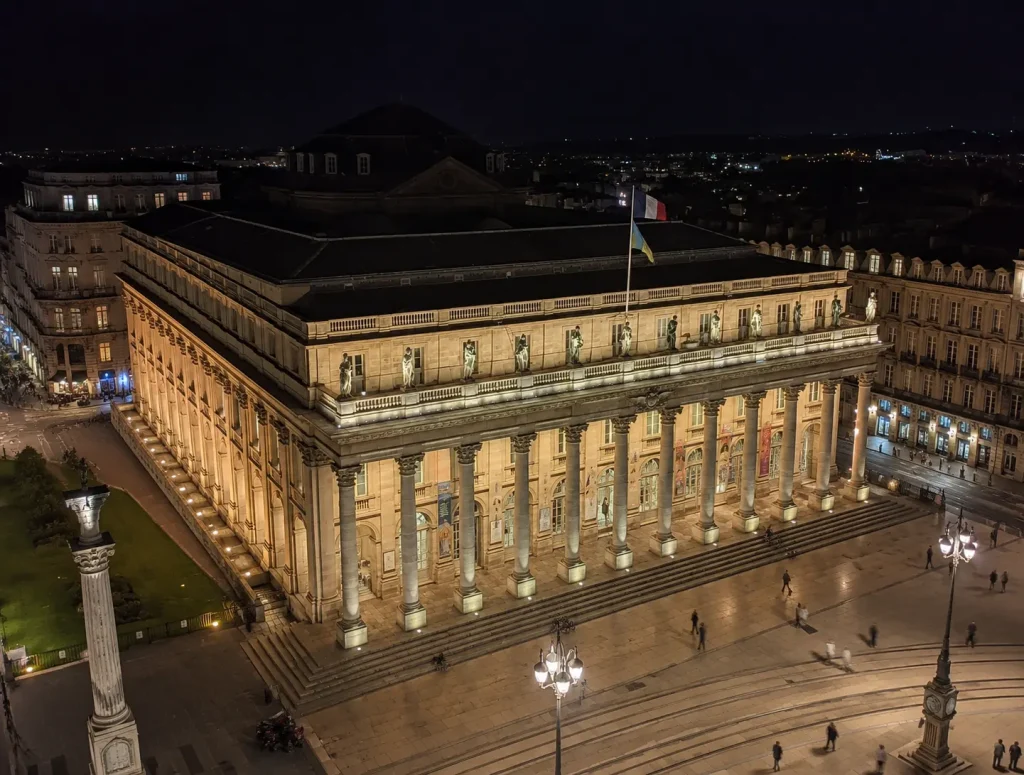
The Grand Théâtre interior tours. Walk past it, stop, look at the colonnade. That part is free and genuinely impressive. The paid interior tours are short and rarely available outside narrow time windows. They’re also crowded. The building was designed to be experienced from the outside. The tours charge you for the inside of a building that didn’t need one.
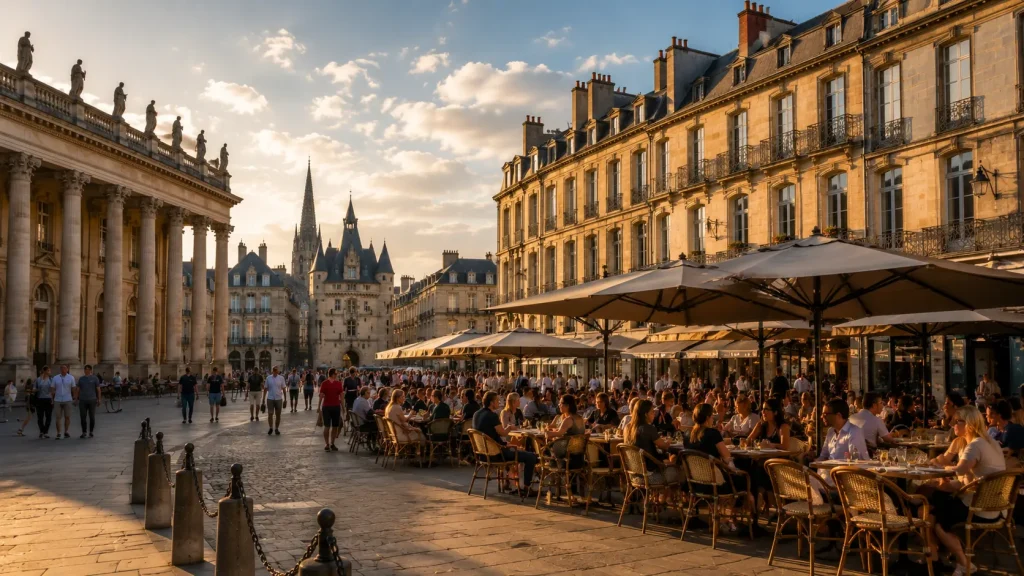
Dinner on Place du Parlement or Place Saint-Pierre. The terraces look appealing in the evening light. The food is mostly average at prices that assume you’re eating wherever you’re standing. Both squares are surrounded by restaurants that exist because of location, not kitchens. Walk two streets in any direction and the dynamic changes immediately.
How To Spend a Weekend In Bordeaux
Day 1: The Historic Centre, Done Properly
Morning: Cathedral, Tower, and the Streets That Matter More
Start at Saint-André, Bordeaux’s cathedral and one of the most significant Gothic buildings in France, and the history earns its weight, as Eleanor of Aquitaine was married here in 1137. Go early, before the tour groups arrive, and you’ll often have the interior almost to yourself.
Climb Pey Berland Tower directly alongside it. The tower is free-standing, built separately from the cathedral because the ground beneath the nave was too unstable for the bell weight. It costs around €6, the climb is 231 steps, and the view over Bordeaux’s rooftops is the best elevated perspective you’ll get without joining a tour.
From the cathedral, walk south into the Saint Paul neighbourhood rather than immediately heading for the main squares. This is the mistake most itineraries make. Rue Saint-James and Rue Sainte-Colombe are prettier and more interesting than anything on the tourist trail north of here: cheese shops, independent bookshops, good bakeries, and almost no one with a suitcase. If you’re going to buy anything in Bordeaux, buy it here.
You’ll pass the Grosse Cloche on the way, one of Bordeaux’s surviving medieval gates at the southern edge of the old city. The two stone towers and the large bell above the arch look old in a way that’s visible and physical, something you feel standing beneath it.
Lunch: Marché des Capucins, Without the Mistakes
Marché des Capucins is the right choice for a first-visit lunch and most guides are correct about that. But most guides undersell the specifics.

Get there by 11:15 on a weekend, not 11:30. The difference between those fifteen minutes is a table outside versus standing and waiting. Chez Jean Mi is the standard recommendation, and it’s the right one: order a dozen oysters, a basket of rye bread, and a glass of Entre-Deux-Mers (the local dry white that costs about €3 a glass here). The oysters come from the Arcachon basin, about an hour from the city. They’re briny, cold, and eaten at the counter with people who do this every Saturday morning. It’s the kind of meal you remember the way you remember a place.
If oysters aren’t your preference, Bistrot Poulette runs a reliable moules frites that costs under €15. Don’t attempt to eat at any of the larger restaurants around the market’s perimeter, as they’re aimed at a different crowd and the quality drops sharply.
One practical note: the market closes around 1pm on Sundays. Don’t arrive at 12:45 expecting a full experience.
Afternoon: The River and the View Everyone Gets Wrong
After lunch, walk east towards the water. The first stop is Porte Cailhau on Place du Palais, a 15th-century river gate that once marked the main ceremonial entrance to the city. It’s one of the few buildings in Bordeaux that gives a direct sense of the medieval city rather than the 18th-century rebuild that covers most of the centre.
Continue to Place de la Bourse and the Miroir d’eau. This is the most-photographed view in Bordeaux and every guide tells you to stand at the edge of the reflecting pool and take the same shot. Walk 200 metres north along the Garonne river quay and look back south instead. You get the full length of the neoclassical facade, the river behind it, and no one standing in front of your frame.
The Miroir d’eau is worth a few minutes, especially in the evening when the mist jets create a low cloud above the shallow water. If you’re visiting in summer with children, bring a change of clothes. They will run through it.
Walk north along the Garonne from Place de la Bourse. Place des Quinconces is about 15 minutes on foot, one of the largest squares in Europe, anchored by the Monument aux Girondins. The scale catches people off guard.
Do not fill this afternoon with more paid attractions. The river walk is the thing.
Evening: Apéro Culture and Where to Actually Eat
Bordeaux does the pre-dinner drink better than most French cities. From around 6pm, the terraces along the quays and throughout the Saint Paul neighbourhood fill up with people who are not in a hurry to eat. The practice is called apéro and it’s not a concept. It’s a daily rhythm. Find an outside table at any wine bar in the Saint Paul streets and order a glass of wine. There is no correct location for this. The point is the pace.
For dinner, book in advance. Bo-Tannique on Rue des Frères Bonie is worth the reservation for a first Bordeaux dinner, with a short seasonal menu that changes frequently, a room small enough that the service stays personal, and a wine list managed by people who clearly enjoy talking about it. Budget around €55-65 per person with a glass or two. Ask for the counter seats near the open kitchen if they’re available.
Le Bouchon Bordelais is the better option if you want something that feels more traditionally French, with a proper canard confit, a bone marrow dish that they do well, and a more forgiving budget. Around €35-45 per person.
Finish the evening at YARRA if you’re in Chartrons, or One More Wine in Saint Paul if you stayed close to the historic centre. Both are proper wine bars. The distinction matters. A wine bar in Bordeaux is built around the list, not the décor or the cocktails. The staff know what they’re pouring and are there to talk about it. At YARRA, the natural wine list changes weekly and the staff will steer you somewhere interesting if you ask. At One More Wine, the terrace on the street outside is the best seat on warm evenings.
Day 2: Chartrons, a Market, and Choosing Your Afternoon
Morning: Walking Through Chartrons Properly
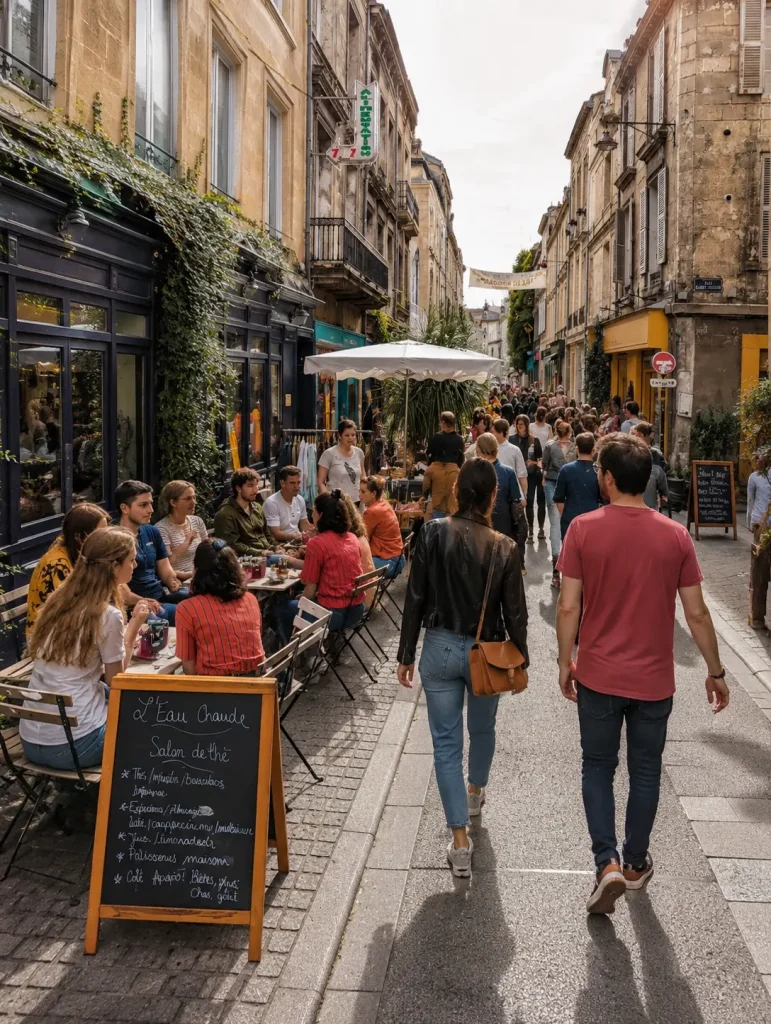
Chartrons is not just “the wine merchant district.” Every guide says that and then gives you three streets to walk. The neighbourhood is genuinely worth a slow morning because it’s still a functioning local area in a way the historic centre largely isn’t.
Start with coffee at Accalmie Café on Rue Notre-Dame: small tables, good espresso, morning crowd that’s local and unhurried. Pure Pâtisserie next door is better than it needs to be.
Rue Notre-Dame is the right spine for the walk. Proper antique dealers, independent boutiques, side streets worth turning into. Walk it slowly.
The architecture in Chartrons is 18th-century merchant houses, taller, more severe, and less ornamented than the showpiece buildings around Place de la Bourse. The facades are narrower, the ground floors still given over to workshops and wine storage. No brasseries. A working-neighbourhood version of the same period and more interesting for it.
Late Morning: Marché des Quais (Sundays Only)
If your second day is a Sunday, the Marché des Quais along the Garonne is the right move at 10am. It runs along the quays north of Chartrons, and it’s significantly more relaxed than Capucins: Arcachon oysters, small-producer wine, local bread, people eating on the quay with the water in front of them. Buy a selection and eat outside. The market closes around 1pm.
Midday: Jardin Public or the CAPC
Jardin Public is Bordeaux’s central park, ten minutes north of Chartrons on foot, and it works well as a midday pause. Large lawns, mature trees, a botanical garden at the edges. If you bought food at the market, this is the obvious place to eat it.
The CAPC Museum of Contemporary Art sits at the southern edge of Chartrons inside a former 19th-century colonial warehouse, the kind of industrial conversion where the building is genuinely more impressive than most of what’s inside. The vaulted stone spaces are enormous and the light is good. Worth an hour, particularly if the weather turns grey. Entry is around €5 and it’s rarely crowded.
Afternoon Option 1: La Cité du Vin and Bassins des Lumières
La Cité du Vin gets dismissed as a tourist trap by people who haven’t visited. It’s a seriously good wine museum covering Bordeaux wine and the wider story of wine as a global phenomenon. The permanent exhibition is interactive without being gimmicky and covers wine culture across centuries and continents in a way that keeps moving. Budget two hours minimum.
The visit ends with a tasting at the panoramic bar on the top floor. The view north over the Garonne, the port cranes, and the vineyard countryside at the city’s edge is the best view of Bordeaux you’ll find. Take it slowly.
Halles de Bacalan, just beside the Cité du Vin, is a good option for a drink before or after: local producers, neighbourhood crowd.
Bassins des Lumières is a 15-minute walk north along the river. The immersive art experience runs inside a former submarine base from the Second World War and the setting is the reason to go as much as whatever exhibition is running. The dock pools are 11 metres deep, the ceilings are vast, and the scale of the projections uses the space in ways permanent galleries can’t. Book tickets in advance; it sells out on busy afternoons.
Tram B to the Cité du Vin stop if you don’t want to walk from Chartrons.
Afternoon Option 2: Darwin and the Right Bank
Cross to the Bastide district by taking the Bat³ river ferry from the Miroir d’eau. Part of the public transport network, normal tram fare, five minutes across the water. It gives you a view of the historic city from the river that you don’t get any other way.
Darwin is a 10-minute walk from the right bank ferry stop. A former military barracks converted into a creative compound: skate park, street art, independent coffee, a good organic restaurant. On weekends something is usually happening. It’s one of those places that works because it isn’t finished.
Day Trips from Bordeaux
Saint-Émilion
Saint-Émilion is 40 minutes by regional train from Bordeaux Saint-Jean, with trains running roughly every hour. Tickets cost around €8 return and can be bought on the day from the station machines.
The village is medieval and compact, built entirely from the same golden limestone that underlies the appellation. Arrive at 10am and the streets are quiet, unhurried, discoverable. By noon the tour coaches arrive. The morning hours matter.
The Monolithic Church is the monument that earns the trip beyond the wine. Carved directly into the rock by monks in the 8th century, the entire interior is hollowed limestone, columns, arches and all, with no masonry added. The guided tour of the underground complex, including the catacombs and ossuary, runs around €8 and takes 45 minutes. Book at the tourist office on Place des Créneaux when you arrive. The bell tower above has one of the better elevated views over the vineyard plateau in the region.
For lunch, avoid Place du Marché. The restaurants on the main square are priced for the coach trade. L’Envers du Décor on Rue du Clocher is a short walk off the tourist street, with a focused wine list of smaller local producers and a short seasonal menu that doesn’t try too hard. Budget around €30-40 per person with wine.
After lunch, walk to one of the estates on the pla
teau. Skip the formal tours. Château Canon and Château Troplong Mondot both have tasting rooms accessible without advance reservation, and the walk from the village takes under 20 minutes through the vineyard. Take the 4 or 5pm train back to Bordeaux.
Arcachon and the Dune du Pilat
Arcachon is an hour by direct train from Saint-Jean, with services every 30 to 60 minutes. It’s a fundamentally different trip from Saint-Émilion, less about history, more about the Atlantic and the strangeness of a Victorian beach resort built at the edge of Europe’s largest pine forest.
The Dune du Pilat is the reason most people make the journey. At 110 metres high and nearly 3 kilometres long, it’s the tallest sand dune in Europe, and nothing about a photograph prepares you for the scale. The seaward face descends into a corridor of pine forest between the sand and the Atlantic, a combination that exists nowhere else in France. The climb from base to ridge takes about 20 minutes.
Go early if you’re visiting between June and August. By midday the surface sand is hot enough to make the climb genuinely unpleasant and the crowds at the base are significant. The 8am train from Bordeaux gets you there before 10am. The difference is considerable.
Arcachon’s oysters deserve as much attention as the dune. The basin producers sell directly at the market halls in the Ville d’Été quarter on the eastern side of town. Order a dozen, eat them with a glass of Graves blanc, around €4-5 a glass, and do it at 11am before the lunch crowd. It’s a better meal than most restaurant lunches at a fraction of the cost.
Where to Stay In Bordeaux
Where you stay shapes the whole trip. Bordeaux hotels are fine for a night, but if you are travelling with family, a group of friends, or you want more than a room and a breakfast buffet, there is a better option within easy reach.
Longeveau is a private estate in the Charente, 1.5 hours from Bordeaux, and it changes the way a trip to Southwest France works entirely. Instead of booking separate rooms in a city centre hotel, you have a collection of villas, cottages, and gîtes on a single estate, with space to actually spread out, a pool, tennis, on-site dining, and enough room for everyone to be together without being on top of each other.
We have had guests use Longeveau as a base for exactly this kind of trip. Two days in Bordeaux, a morning in Saint-Émilion, an afternoon at Arcachon, and the rest of the time on the estate doing very little and enjoying it. The Charente is that kind of place.
It works particularly well for families with young children. The estate is designed with that in mind, the grounds are safe, and there is enough to keep everyone occupied so that the adults actually get to relax. That is rarer than it sounds.
If you are planning a trip to Southwest France and want somewhere that gives you more than a place to sleep, Longeveau is worth a look.
See accommodation at Longeveau
Planning a group trip or a longer stay? Get in touch and we can help you work out which combination of properties suits your group best.
Frequently Asked Questions About Bordeaux
Is two days enough for Bordeaux?
Yes. Two days covers the historic centre, the riverfront, Chartrons, and one afternoon option (Cité du Vin or the right bank) without rushing. Most people leave with a clear sense of the city and a list of reasons to come back. A third day is worth adding if you want a day trip. Saint-Émilion or Arcachon both work as easy extensions.
What is Bordeaux most known for?
Wine, first. It’s the wine capital of the world and the surrounding appellations include some of the most famous estates on the planet. But the city itself is known for its 18th-century architecture, its UNESCO World Heritage-listed historic centre, and a food and restaurant scene that has become one of the best in France over the last decade.
When is the best time to visit Bordeaux?
April to June and September to October. Late May and early June offer the best combination of good weather, long evenings, and manageable crowds. September is harvest season in the surrounding vineyards, which makes it the best window if wine estate visits are part of the plan. Avoid January if you want the full riverfront and terrace experience.
Do you need a car to visit Bordeaux?
No. The historic centre and Chartrons are both walkable, the tram network covers the rest of the city, and the main day trips, Saint-Émilion and Arcachon, are both straightforward by train from Bordeaux Saint-Jean station. A car would make the city harder to navigate, not easier.
Why Bordeaux Is Worth the Detour
The Bordeaux weekend itinerary that most guides give you is accurate but passive. It tells you where to go without telling you why some of those places are actually worth your time and others are fine to skip, or how the city changes depending on which end of it you’re standing in at what hour.
Bordeaux is not complicated. But it rewards the people who show up with a rough plan and enough flexibility to abandon it. The best afternoons in this city tend to start as walks to somewhere specific and end at wine bars in Chartrons that were never on the itinerary, talking to the people who run them. That’s the version of Bordeaux worth coming for. Few cities in France give you this much in two days.
Staying at Longeveau? Bordeaux is 1.5 hours by car and worth building into your trip. Plan your stay.
Manoir de Longeveau — 35 self-catering gîtes with heated pools, on-site golf and tennis, minutes from Aubeterre-sur-Dronne.
Browse the gîtes