A south west france road trip runs from the Loire down through Bordeaux, along the Atlantic coast to Biarritz, and back. Most people know that route well. What gets missed is the inland section through the Charente and Dordogne, the quieter, older version of the same journey running parallel to the coast.
This itinerary covers both. It just makes sure you do not skip the part most guides leave out.
How Many Days Do You Need for a Southwest France Road Trip?
This is a 10 to 14-day itinerary designed for drivers arriving from the United Kingdom via ferry, either through Portsmouth to Caen, or Plymouth to Roscoff. Both routes drop you into the Loire Valley within a few hours, which is the natural first stop heading south.
From there the route runs south through the Charente and Dordogne for the inland section, down to Bordeaux and the Atlantic coast, then west to Biarritz and the Basque Country before looping back north.
Here is how the time breaks down:
- 10 days: Two nights each in the Charente, Dordogne and Biarritz, one night in the Loire and one in Bordeaux. Tight but workable.
- 12 days: Adds a third night in the Dordogne and one more in Bordeaux. The trip gains breathing room.
- 14 days: The comfortable version. Room for a slow morning, an unplanned stop, and the kind of detour that becomes the story you tell afterwards.
The best thing you can do on this route is protect your time rather than fill it. Every section of this itinerary has a natural pace. Push against it and the trip becomes a list of places you passed through. Work with it and you end up somewhere you actually know.
For families or groups, booking a private estate as a base in the Charente or Dordogne and using it for day trips from the Charente and Dordogne is worth considering. It removes the nightly unpacking, keeps children settled, and gives you more time actually being somewhere rather than moving between places.
Build slack into your itinerary. Southwest France will fill it.
The Loire: Your First Night on the Road
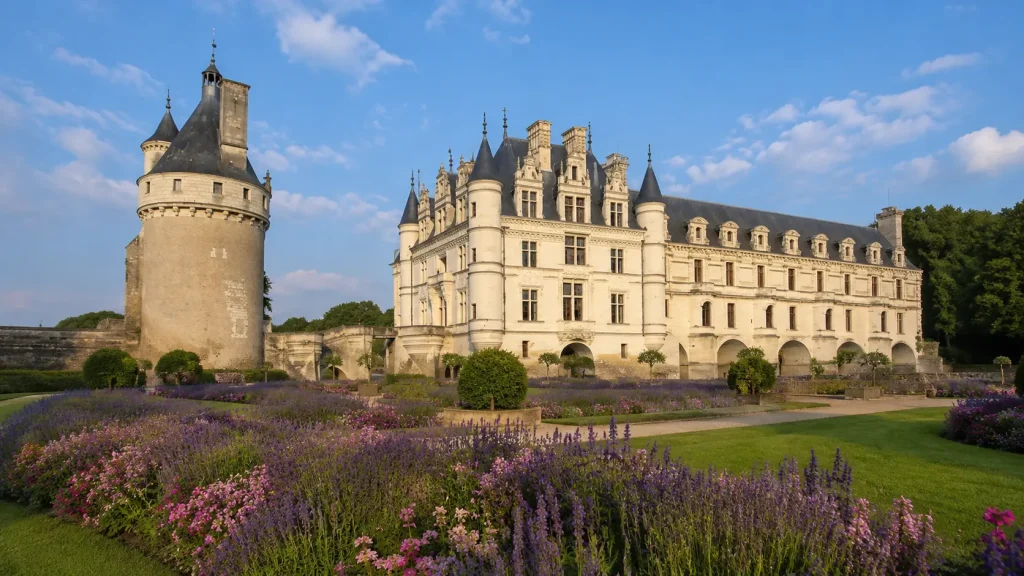
After the ferry crossing and the drive south, most travellers stop somewhere in the Loire Valley for the first night. It is the right call. The Loire is beautiful, the roads are easy, and towns like Saumur and Chinon offer exactly what you want after a day of travel: a good dinner, a carafe of local wine, and somewhere comfortable to sleep.
If you have time the following morning before hitting the road again, spend an hour in the old town. The architecture here is the kind that France does quietly and without fuss.
Half-timbered houses lean against stone towers, rivers glide past market squares, and the whole thing feels like a place where the twenty-first century arrived late and mostly got ignored.
This is not the main event of your road trip through France. But it is a good warm-up for everything that follows.
The Charente: Where the Road Trip Properly Starts
The Charente is the section of this journey that most guides skip on their way to somewhere more famous. Skipping it is the most common planning mistake on this route.
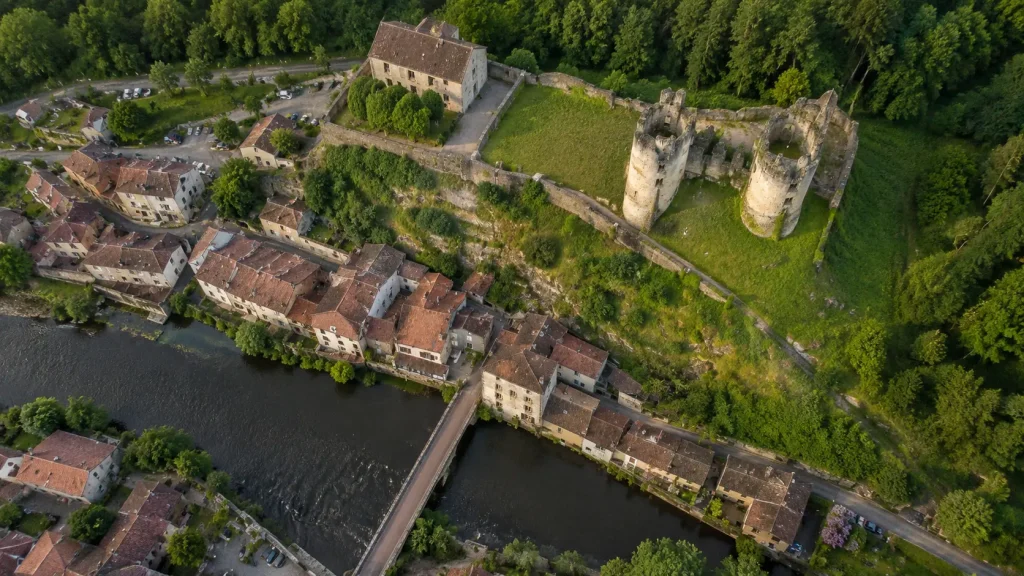
The countryside here is open and unhurried. Rivers cut through soft limestone valleys. Villages like Aubeterre-sur-Dronne cling to hillsides above the water, their churches carved directly into the rock face in a way that stops you mid-sentence when you first see them. Aubeterre is listed among the most beautiful villages in France, and unlike some on that list, the description is not an exaggeration.
The Charente is also cognac country. The town of Cognac itself sits on the Charente river and is worth a half day, though the real pleasure is the countryside around it: rows of vines, stone farmhouses, and a stillness that the south of France road trip crowd rarely reaches.
Two nights here is the right call if your itinerary allows it. Arrive on the first afternoon and give yourself time to slow down. The second day is for the river villages, a long lunch somewhere with a terrace, and an aperitif in the early evening with no particular plan for what comes after.
We send guests from the estate here on their first full day. Almost all of them come back saying they stayed longer than they meant to.
The Dordogne: The Heart of the Inland Route
The Dordogne earns its reputation and then some. Of all the regions in France that reward travelling by car, this one delivers most consistently.
Distances between stops are short, the roads are scenic, and every time you think the landscape has shown you its best, it turns a corner and shows you something better.
Sarlat-la-Caneda is the obvious anchor point and deservedly so. The medieval village at its centre is one of the best-preserved in France: golden limestone streets, covered markets, and a cathedral that rises above the rooftops in a way that takes a moment to properly register. Spend a full day here, including a morning stroll through the Saturday market if your timing allows.
From Sarlat, the Dordogne valley opens up around you. The châteaux at Beynac and Castelnaud face each other across the river from opposite cliff tops, both breathtaking in the literal sense of the word, both open to visitors. The prehistoric cave art at Lascaux, just north of Sarlat near Montignac, is replicated in the modern Lascaux IV museum and is one of the most affecting cultural experiences southwest France offers.
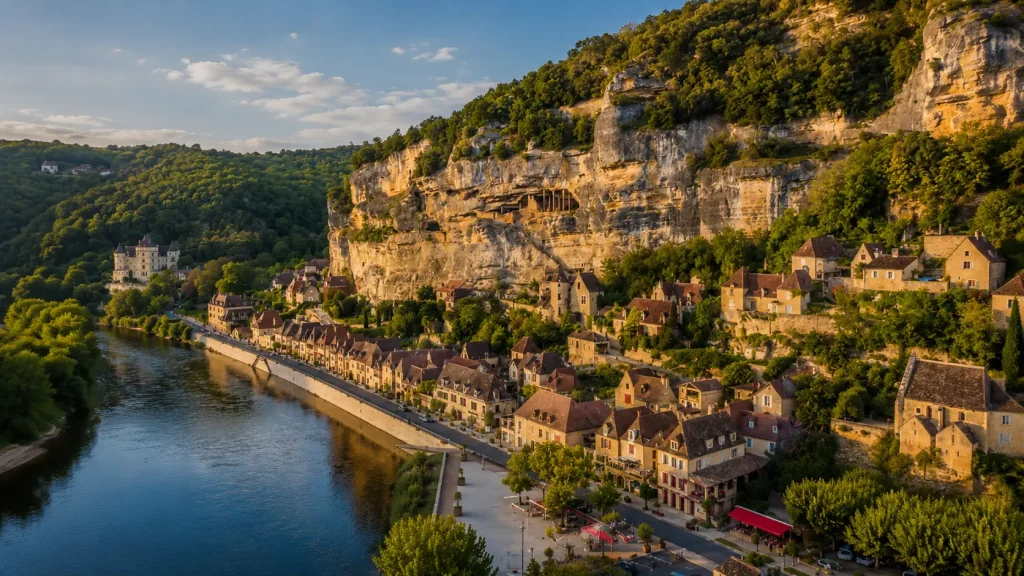
The Dordogne also rewards the unplanned stop. Pull over when a village looks interesting from the road. Most of them are. The picturesque riverside hamlet of La Roque-Gageac, built between a cliff face and the water, is the kind of place that appears around a bend and makes the whole car go quiet.
Plan three nights in the Dordogne if you can. Two nights is the minimum before the region starts to feel rushed. Every guest who has done both tells us the same thing: the third night is where the Dordogne actually opens up.
From the Dordogne, Bordeaux is two hours west and a complete change of pace.
Bordeaux: A City That Rewards Staying Longer Than You Planned
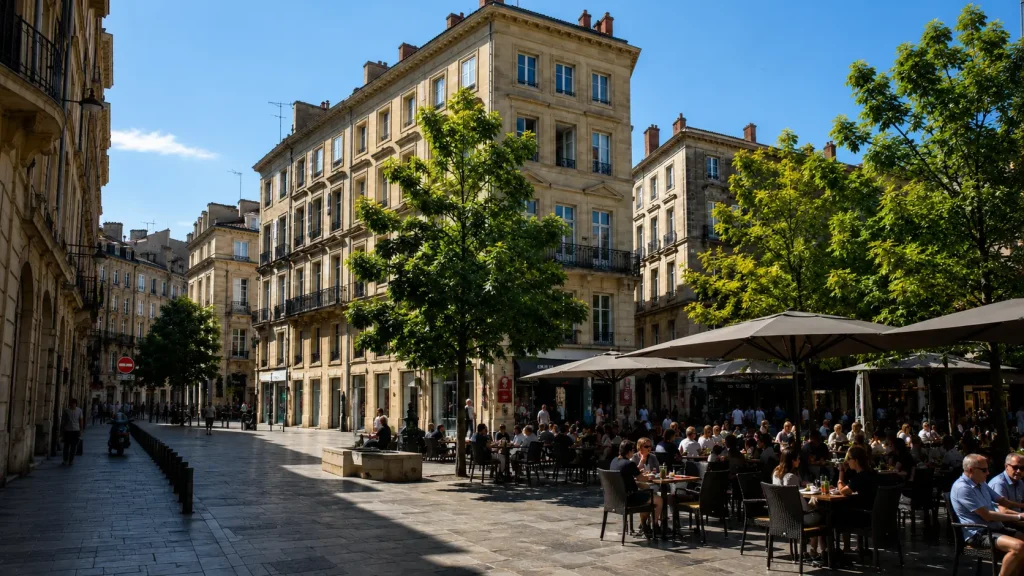
Bordeaux has been transformed over the past decade into one of the most walkable and visually satisfying city centres in France, and most road trip itineraries give it one night. That is not enough.
The quays along the Garonne, the Grand Theatre, the covered market at the Marche des Capucins, and the UNESCO World Heritage-listed architecture of the old town all combine into a place that earns its reputation without trying to impress you.
Wine is woven into every part of how Bordeaux operates, from the merchants on the Quai des Chartrons to the cave à vin tucked into almost every restaurant in the old town. Day trip options from Bordeaux include Saint-Emilion, one of the most beautiful and photogenic medieval villages in all of France, and the vineyard routes of the Medoc, which stretch north along the west bank of the Gironde through some of the most famous wine labels in the world.
One night in Bordeaux is fine if your itinerary is tight. Three nights lets you settle into the rhythm of the place, which is the only way to understand it properly.
The Atlantic Coast Drive: Bordeaux to Biarritz
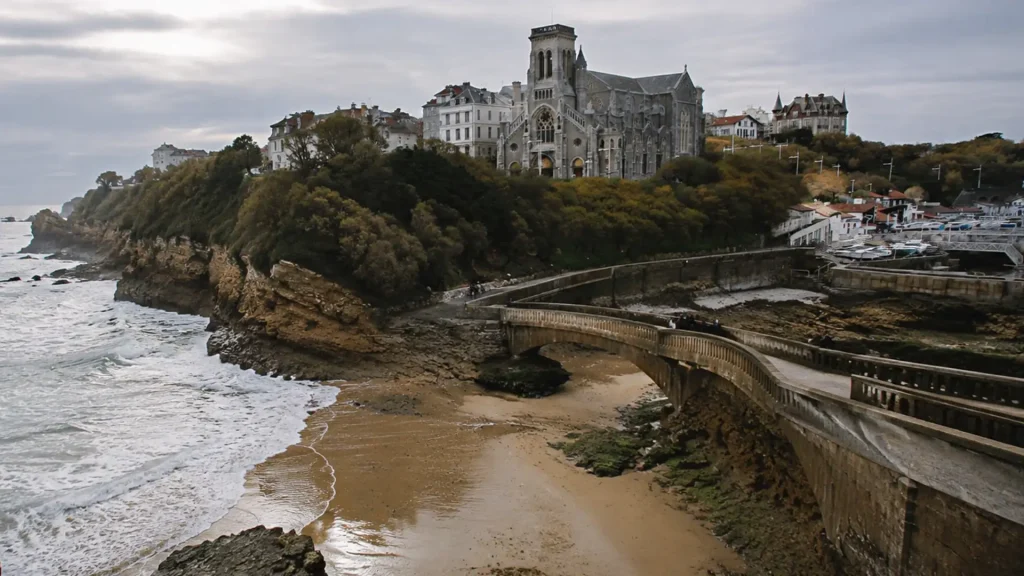
South of Bordeaux, the road trip shifts gear. The landscape opens into pine forest, the air changes, and the Atlantic Ocean announces itself before you can see it.
Arcachon is the first stop worth making on France’s Atlantic coast. The town sits on a sheltered bay famous for its oysters, which you can eat at waterfront shacks for a few euros a dozen, with a glass of cold Entre-Deux-Mers and nothing else required.
The oyster beds of Arcachon have been producing since the nineteenth century, and the ritual of eating them here, on the shore, with the bay in front of you, is one of those things that road trips through France are actually for.
South of Arcachon, the Dune du Pilat rises to over one hundred metres above the shoreline. It is the tallest sand dune in Europe, and the view from the top across the pine forest on one side and the Atlantic on the other is one of the genuine road trip highlights of the entire southwest. The climb takes fifteen minutes. Take water.
Further south, the Landes coast stretches in an almost unbroken line of sandy beach backed by forest. The villages along this stretch, places like Hossegor and Capbreton, are surf towns with a California-on-the-Atlantic energy. The seafood is good, the waves are consistent, and if you have ever thought about trying surfing, book a lesson here rather than anywhere else on the route.
Biarritz: Where the Atlantic Coast Finds Its Character
Biarritz is the most glamorous stop on the southwest France road trip, and the one that rewards a full two nights.
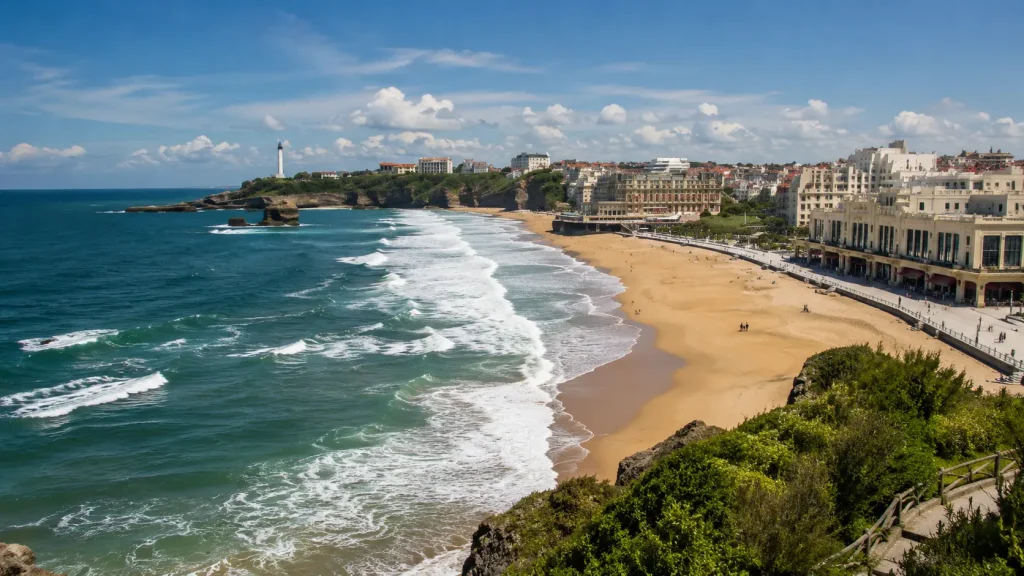
The town sits on a series of rocky headlands above the Atlantic, with beaches wedged between them and a plage in the centre of town that fills with surfers, swimmers, and families from early morning until after dark in summer.
The architecture is a mix of belle-epoque grandeur and Basque vernacular, which gives Biarritz a visual personality unlike any other seaside resort in France.
The Basque culture here shows up in the food and in the architecture, in the pelota courts behind the old quarter and in the festivals that take over the streets in summer. Biarritz is French by administration and Basque by spirit, and that combination produces a town with more character than most places twice its size.
Eat at least one dinner in the old port quarter, where the restaurants are closer to each other than the guidebooks suggest. Start with a dozen oysters or a plate of jambon de Bayonne. Follow it with grilled fish or a dish built around the local piment d’Espelette, the Basque chilli pepper that appears in virtually every regional speciality. Finish with a digestif and no particular plan to leave.
The Basque coast south of Biarritz, running toward the Spanish border, is also worth a morning. The corniche road from Biarritz to Hendaye follows the cliffs above the Atlantic and offers panoramic views back along the coast that make it one of the best drives on this entire itinerary.
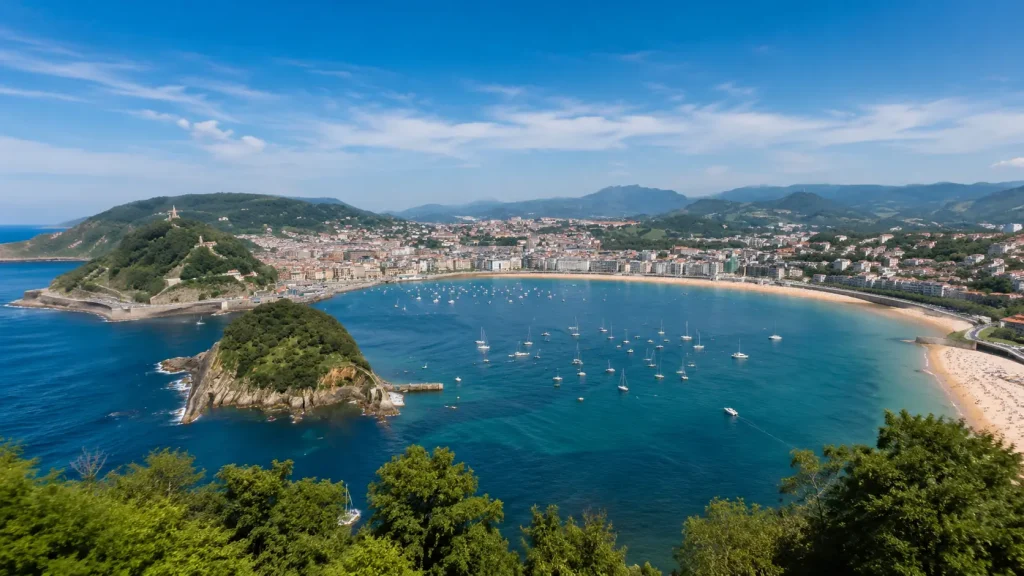
San Sebastian and the Basque Country: Worth Adding to Your Itinerary
If your france itinerary has flexibility, crossing into Spain for one or two nights is one of the best decisions you can make on this road trip.
San Sebastian sits forty-five minutes south of Biarritz and is widely regarded as one of the finest food cities in Europe. The old town pintxos bars serve small plates of extraordinary food at the counter for two or three euros each. Walk from bar to bar, order whatever looks interesting, drink local txakoli wine, and repeat. It sounds simple. It is one of those meals you spend the drive home talking about.
The broader Basque country across the border adds its own momentum. Bilbao, an hour west along the coast, brings the Guggenheim Museum and a dramatically regenerated waterfront. Whether you include it depends on how much time you have. But if the road trip allows it, the stretch of coastline running through France and Spain here is some of the best driving in western Europe.
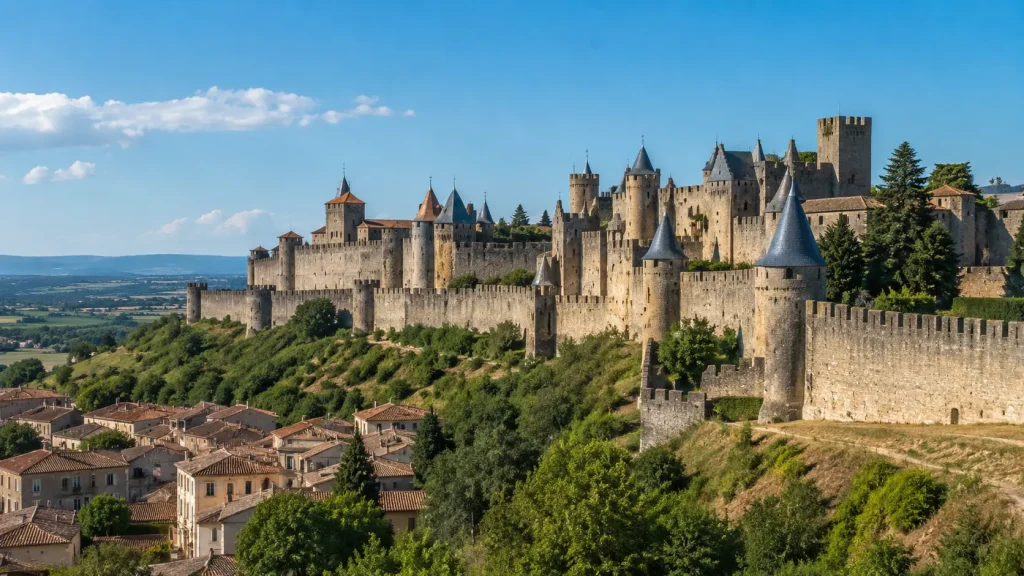
Is Carcassonne Worth Stopping For on a Southwest France Road Trip?
If you are looping back north rather than returning to the same ferry port you arrived through, Carcassonne sits roughly halfway between the Pyrenees foothills and the A61 motorway north. It earns a stop.
The medieval citadel at Carcassonne is the best-preserved fortified city in Europe. You can see it from the motorway before you reach the exit, and it looks impossible, a complete medieval village inside double walls and fifty-two towers, intact, inhabited, and open. A UNESCO World Heritage site since 1997, it draws crowds in summer, but even a two-hour visit in the morning before the tour coaches arrive gives you enough time to understand why it has been fought over, sung about, and obsessed over for eight centuries.
From Carcassonne, the road north leads back through the Dordogne and Charente if you want to revisit favourite stops, or straight to the Loire and the ferry ports if your time is up.
Southwest France Road Trip: Best Time to Visit and Driving Advice
Getting there from the UK: The Portsmouth to Caen crossing with Brittany Ferries takes around six hours and drops you within easy driving distance of the Loire. Plymouth to Roscoff is similar in duration and slightly further west. Both work well for this itinerary.
May, June, and September are the best months. July and August bring crowds to the Atlantic coast and push prices up. Spring and early autumn give you the warmth without either.
Driving: French roads are well-maintained and motorway tolls are manageable if you budget for them. Download an offline map before you leave. Mobile data on rural Dordogne back roads is unreliable, and the best drives on this route are not on the main roads anyway.
Ready to Plan Your Southwest France Road Trip?
If you are reading this far, you are probably closer to booking than you think. Southwest France by car from the UK is one of the most manageable long trips you can plan, and the inland section through the Charente and Dordogne is the part most people wish they had known about sooner.
The ferry slots in June fill faster than you expect. Start there.
Frequently Asked Questions
What is the best route for a road trip in southwest France?
The most complete route runs from the Loire south through the Charente and Dordogne, then down to Bordeaux and along the Atlantic coast to Biarritz. If you are travelling from the UK by ferry, Portsmouth to Caen or Plymouth to Roscoff both drop you into the Loire within a few hours, which makes a natural first night. The inland section through the Charente and Dordogne is the part most itineraries skip and the part most travellers say they would spend longer in on a second trip.
How many days do you need to road trip southwest France?
Ten days is workable if you keep overnight stops to two nights per destination. Fourteen days is the version where the trip stops feeling like a schedule. The sweet spot for most travellers is 12 days: enough time for three nights in the Dordogne, two in Bordeaux, and two in Biarritz without the itinerary running you rather than the other way around.
Is southwest France good for a family road trip?
Yes. Particularly the inland section. The Dordogne has some of the best family-friendly driving in France: short distances between stops, medieval villages that children find genuinely engaging, river activities, and castle viewpoints that require no explanation. The Atlantic coast adds beaches and surf towns. Families who prefer a fixed base rather than nightly hotel moves often book a private estate in the Charente and use it for day trips, which removes most of the logistical friction of travelling with children.
Looking for a base in the Charente for this route? Manoir de Longeveau is a private estate near Aubeterre-sur-Dronne with villas and cottages for families and groups, a pool, and everything you need to spend a few days exploring the best of southwest France without unpacking every night. Explore accommodation at Longeveau.
Manoir de Longeveau — 35 self-catering gîtes with heated pools, on-site golf and tennis, minutes from Aubeterre-sur-Dronne.
Browse the gîtes