The Dordogne has more castles than most people realise and fewer worth a full afternoon than the tourist maps suggest. The region counts roughly a thousand listed historic structures. The best castles in the Dordogne, Beynac, Castelnaud, Biron, Commarque, Hautefort, and Milandes are genuinely worth the drive. The rest vary enormously, and knowing which is which saves a wasted day.
Not a cynical observation. A practical one. The question is not whether there are beautiful castles in the Dordogne. There clearly are. The question is which ones reward the time you put in and which ones look better in the brochure than they do on the day.
This guide covers the ones that are genuinely worth visiting, what makes each one different, and what to expect when you get there.
Why Does the Dordogne Have So Many Castles?
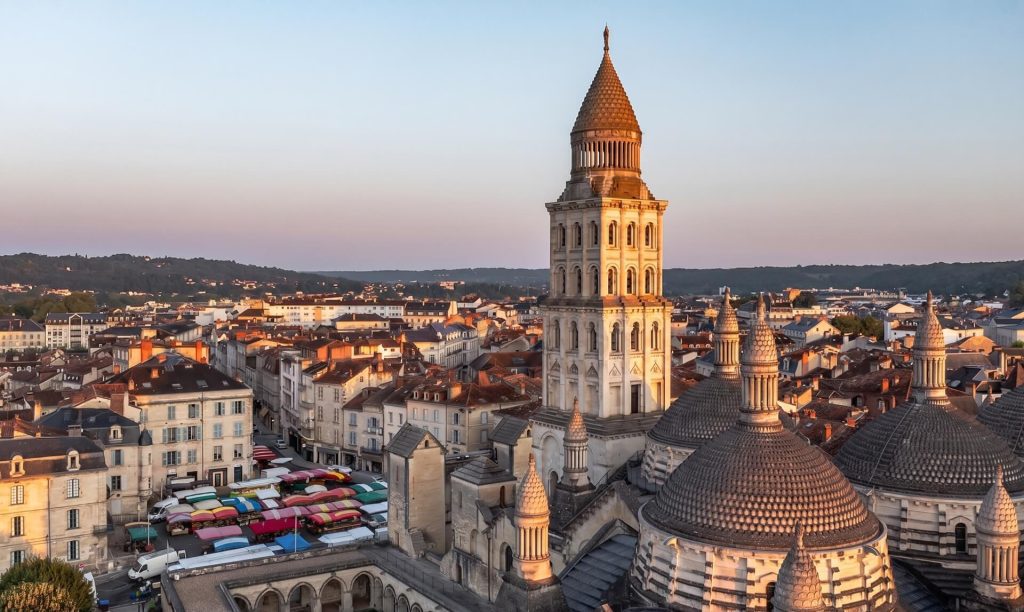
The short answer is geography and six centuries of war. The longer answer explains why the castles here feel different from anywhere else in France.
The Hundred Years’ War and the Strategic Logic of the Cliffs
The Périgord was contested territory for most of the Middle Ages. The Dordogne Valley sat on a strategic line between the kingdoms of France and England, and the Hundred Years’ War was fought in and around these hills from the 14th century through to the mid-15th century. Fortification was not decorative. It was survival.
Every ridge along the Dordogne River had a military purpose. The cliff faces that look so picturesque today were chosen precisely because they were indefensible from below. The keeps that still stand were built by lords whose continued existence depended on the quality of their walls. As the Wikipedia record of Château de Beynac notes, castles in this region fell more often through ruse and intrigue than direct assault: only the richest kings could afford the armies needed to take them by force.
The river itself was the border. Beynac was French. Castelnaud, directly opposite on the south bank, was English. Two kilometres of water separated them. Both are still standing.
How Gothic Fortresses Became Renaissance Châteaux
After the Hundred Years’ War ended, the surviving noble families stopped fortifying and started embellishing. Gothic stonework gave way to Renaissance additions. Formal gardens appeared where moats had been dug. Decorative loggias replaced defensive battlements. The result is a layered architecture across the region where many châteaux carry the marks of several centuries in a single building.
This is why a single day in the Dordogne Valley can move you through military Gothic and Renaissance domestic architecture and later 17th-century palatial design without driving more than thirty kilometres. The castles here are not relics. They are a compressed architectural history of a contested region, and the limestone cliffs still show the evidence.
Château de Beynac: The One That Defines the Valley
If you visit one castle in the Dordogne, make it Beynac.
Perched on a sheer cliff face above the village of Beynac-et-Cazenac, with the Dordogne river directly below it, it has the most commanding position of any fortress in the region. From the terrace you can see La Roque Gageac to the east, Domme sitting on its plateau to the south, and the river bending between them. On a clear morning it is one of the best views in France. Not the best in the Périgord. In France.
What to Expect Inside
The château dates to the 12th century. Held by the English during the early Hundred Years’ War, it later became one of the four baronies of Périgord. The interior is largely bare stone, which is accurate rather than disappointing. This was a working fortress. The great hall has its massive Romanesque fireplace. The original staircase connects the floors. Nothing has been prettified.
The Salle des États, the States’ Hall, contains a Renaissance sculptured fireplace and leads into a small oratory covered entirely in 15th-century frescoes: a Pietà, a Saint Christopher, and a Last Supper in which Saint Martial, the first bishop of Limoges, appears as maître d’hôtel. Most visitors walk past this room too quickly. It is the most unusual thing in the building.
The upper apartments have kept their 17th-century woodwork and a painted ceiling. Tapestries showing hunting scenes and the lives of the lords of the period hang throughout. The overall effect is a building that has been inhabited across many centuries and shows it without apology.
What makes Beynac particularly valuable as a visit is the view across the valley to Château de Castelnaud, about two kilometres away. During the Hundred Years’ War, those two fortresses were held by opposing sides and traded raids across the water. You can see the enemy clearly from the tower. The proximity makes both castles significantly more interesting when you visit them in sequence.
Films Shot at Château de Beynac
Beynac has served as a film location more often than any other castle in the Dordogne, which is worth knowing before you arrive because the visual familiarity can be disorienting in the best possible way.
The castle appears in Les Visiteurs (1993), the French comedy that became one of the highest-grossing films in French cinema history. It was used for Jeanne d’Arc (1999), Luc Besson’s film with Milla Jovovich. Portions of Chocolat (2000), directed by Lasse Hallström, were filmed in the village of Beynac directly below the castle. Ever After (1998), the Drew Barrymore Cinderella retelling, was shot here. And most recently, Ridley Scott chose Beynac as a primary location for The Last Duel (2021), with Matt Damon, Adam Driver, and Jodie Comer.
The kitchen table visible in the lower rooms was used by Sophie Marceau during the filming of La Fille de d’Artagnan (1994). It is still there.
None of this information appears on the castle’s own signage. The guides know it. Ask.
Practical Information
Allow ninety minutes minimum. The climb from the village to the entrance is steep, which matters if you are travelling with young children or anyone less mobile. Open daily from April to November, with shorter hours in winter. Adult admission is approximately €9. Check the official Beynac website for current season dates and prices before you travel.
Château de Castelnaud-la-Chapelle: The Medieval Fortress That Works as a Museum
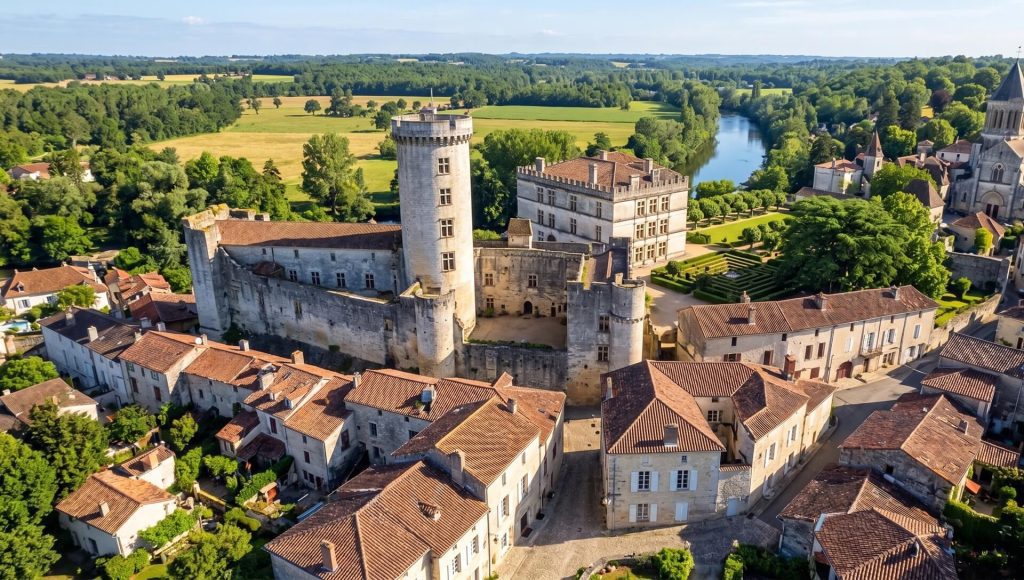
Castelnaud is the most visitor-ready castle in the Dordogne. That is both its strength and its limitation, and it is worth going in with clear expectations.
The 13th-century fortress has been carefully restored to its 15th-century appearance. The walls, towers, and battlements are well preserved and give a real sense of scale. The view from the upper terraces across the valley to Beynac is the image that ends up on every Dordogne tourism poster, and it earns its place there.
The Museum of Medieval Warfare
The museum inside Castelnaud is the best reason to visit. Mediaeval warfare is covered in full, with a collection of siege weapons, armour, and weaponry that children find compelling and adults find more interesting than they expected. The display is well curated rather than simply comprehensive: the progression from early mediaeval weapons through to late 15th-century siege technology is logical and well labelled.
There is a working trebuchet in the courtyard. It is large. Costumed demonstrations run several times daily through the summer season, including an “attacking the castle” guided visit and a trebuchet firing demonstration. For families who want the castle to feel active rather than passive, Castelnaud delivers.
When to Visit to Avoid the Crowds
The limitation is crowds. Castelnaud’s combination of strong marketing, year-round opening, and a well-designed visitor experience means it draws large numbers, particularly in July and August. The car parks fill by mid-morning in peak season. The castle at nine in the morning before the tour buses arrive is a fundamentally different experience from the castle at half past eleven.
If you cannot visit early, late afternoon is the second-best option. After four o’clock the numbers thin out. The light on the valley from the upper terraces in the late afternoon is better than the midday view in any case.
Practical Information
Open every day all year round, 10am to 7pm in peak season. Adults: €13.60, children aged 10-17: €6.80, under 10s: free (2026 prices). Dogs welcome on a lead. Combined tickets with Marqueyssac Gardens available (adult €24.50). See castelnaud.com for current opening times and the full events calendar.
Château des Milandes: Josephine Baker’s Périgord Château
Built in the late 15th century in Gothic style with Renaissance details, Château des Milandes has a story attached to it that almost no other castle in France can match.
Josephine Baker bought the property in 1947. At that point she was already one of the most famous entertainers in the world: an American-born dancer and singer who had become the toast of Paris in the 1920s, a decorated Resistance operative during the Second World War, and a woman whose personal story involved more reinvention than most lives contain in total. She had been awarded the Croix de Guerre and the Légion d’honneur. She had performed at the Liberation of Paris.
At Milandes she pursued a different project. She adopted twelve children from twelve different countries and different racial and religious backgrounds, housing them at the château in what she called her “Rainbow Tribe” and publicly presenting them as proof that a world without racism was possible. She called it her “village of the world”. In the 1950s and 1960s, Milandes became a tourist attraction in its own right, drawing up to three hundred thousand visitors a year to see Baker and her family.
She eventually lost the château to debt in 1969 and was carried out of it by force. She died in Paris six years later, three days after her final comeback show sold out the Bobino Theatre. She was 68. In 2021 she became the first Black woman to be inducted into the Panthéon.
The interior reflects both the 15th-century architecture and that 20th-century history. Her costumes are there. The photographs. A room covers the Resistance in detail. The formal garden has been restored to its original design. The falconry display runs several times daily, the castle walls behind it making a backdrop that most falconry centres pay good money to pretend they have.
No other castle on this list combines architectural heritage with a personal story of this weight.
Château de Hautefort: Where the Wars Ended and the Gardens Began
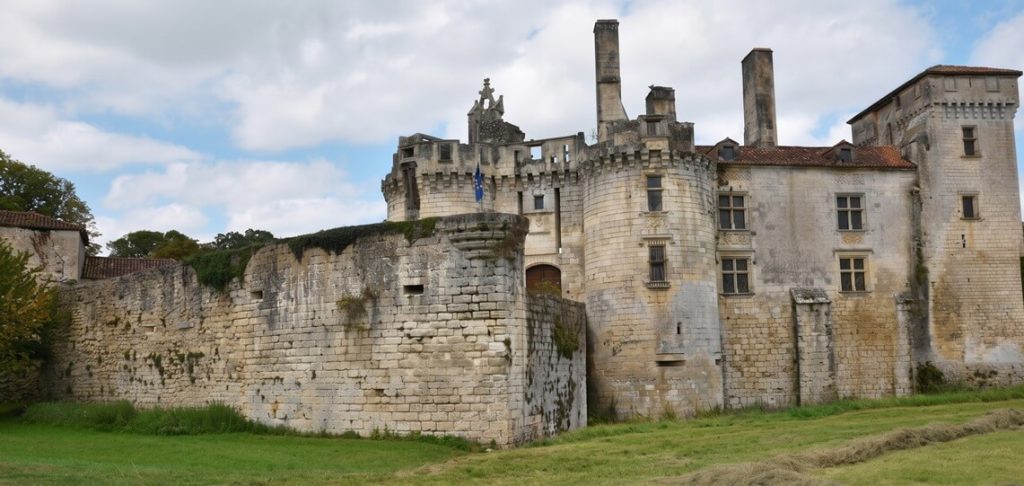
Hautefort is not a military castle. It never really was.
Built primarily in the 17th century on the site of an earlier mediaeval fortress in the northern Périgord, it is the Dordogne’s answer to the Loire Valley châteaux: symmetrical facades, formal parterres, a terrace with views in three directions. Closer in spirit to Versailles in miniature than to anything that might have repelled an English army.
The interior sustained serious fire damage in 1968 and was subsequently restored over several decades. It is now well presented and gives a clear picture of how a noble household of the 17th century was organised and furnished. The comparison with the valley châteaux is instructive. Beynac was built for survival. Hautefort was built to show everyone that survival was no longer the question.
It suits visitors with an interest in Renaissance and later architecture, and it provides a natural counterpoint to the Hundred Years’ War atmosphere that dominates the Dordogne valley. If you have spent two days looking at military fortresses on cliffs, Hautefort is the right place to end the trip.
Château de Biron: The Giant of the Southern Périgord
Biron is the one that stops you mid-drive.
Visible from several kilometres away, rising above the rolling fields of the southern Périgord on a bare hilltop, it is the largest castle in the Dordogne by footprint and one of the most architecturally layered. Construction started in the 12th century and continued in stages through the Renaissance and into the 17th century, which means no single architectural style dominates. Gothic chapels sit alongside Renaissance loggias. Mediaeval towers look across at a staircase that would not be out of place in a French palace.
The château was held by the Gontaut-Biron family for over five hundred years, one of the longest continuous noble occupations of any fortress in France. The scale reflects that longevity. This is not a castle built in one campaign. It is a fortress that was argued over, extended, abandoned, and rebuilt across centuries, and the resulting complexity is precisely what makes a visit worthwhile.
Biron sits close to the Lot border, about forty minutes south of Sarlat. It is less visited than Beynac or Castelnaud. That is an argument in its favour.
Château de Commarque: The One Nobody Tells You About
Commarque is possibly the least visited significant castle in the Dordogne. That is precisely the argument for going.
The site is a ruined 12th and 13th-century castle complex abandoned in the 15th century and left largely untouched for five hundred years. It sits in a narrow wooded valley on the Vézère, surrounded by what was once a mediaeval village. Behind the castle, the cliff face contains cave carvings that predate the fortress by thousands of years. Prehistoric and mediaeval occupying the same limestone. Unusual anywhere in the world.
No gift shop at the entrance. No costumed guides. The towers are partially accessible, the great hall is open to the sky, and you walk through the remains of the mediaeval village between the castle and the river. It takes about two hours and feels nothing like the more commercial sites.
If you are visiting the Vézère valley for the Lascaux cave paintings near Montignac, Commarque is close enough to include in the same day. Take it.
Château de Monbazillac: The Castle That Comes with Wine
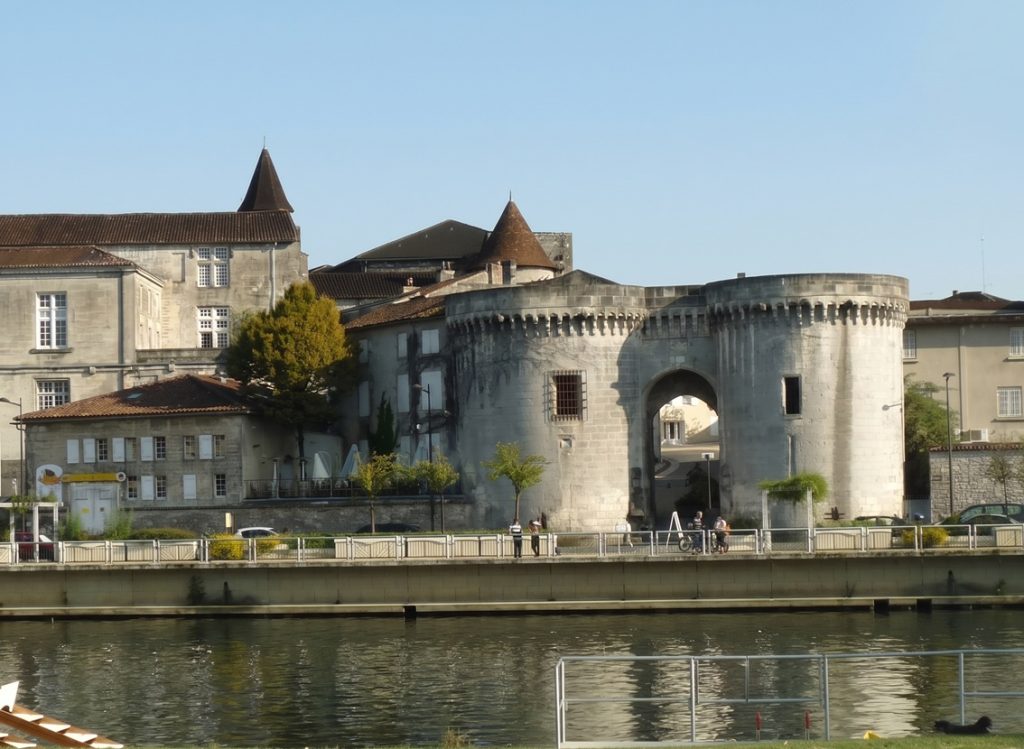
Monbazillac sits above the Bergerac wine region surrounded by the vineyards that produce the sweet white wine of the same name. A 16th-century Renaissance château that has been a wine-producing estate for most of its existence and is now owned by the local cooperative.
The building is handsome rather than spectacular. Corner towers, a central courtyard, good original stonework. The interior has been furnished with period pieces and includes a museum covering the history of the Bergerac wine trade. The guided tour ends in the cellars.
What earns it a place on this list is the combination. An architectural visit and a wine tasting in the same afternoon, without driving to two separate destinations. If you are in the southern Dordogne or near Bergerac, that practical logic makes a good half-day.
Château de Jumilhac: The Fairy-Tale Castle of the Périgord
The roofline is what you notice first. The 16th and 17th-century towers at Jumilhac are capped with steep, angular slate roofs and decorative ironwork finials that give the castle a silhouette unlike anything else in the region. It looks like something a child would draw when asked to draw a castle.
The interior is furnished with original pieces: heavy oak furniture, Flemish tapestries, and a floor plan that has barely changed since the 17th century. The formal garden has been restored to its 17th-century design. There is also a story the guides tell well. A 17th-century lord locked his wife in a tower room. She spent her years spinning, weaving, and apparently scratching drawings of her forbidden lover directly into the floor. The marks are still there.
Jumilhac is further north than the main valley sites and rarely appears on the standard tourist route. If you are coming from the Charente direction or spending time in the northern Périgord, it is worth the detour. The approach through the wooded Dronne valley is good preparation for a castle that rewards the effort.
Maison Forte de Reignac: The Castle in the Cliff
This one requires a slight adjustment of expectations. Reignac is not a château in the conventional sense. It is a mediaeval stronghold built directly into the limestone cliff face above the Vézère valley, the rock itself forming the back wall of every room.
It is the best-preserved troglodyte castle of its type in Europe. You approach from below through the cave village that grew up around it, walking up through chambers carved from solid stone, emerging into rooms where the cliff face simply continues behind you. The furniture and fittings are from the original period of occupation. From the upper levels, looking down over the Vézère valley and the river below, the drop is vertiginous in the best possible way.
Smaller than the major châteaux. About an hour. Combined with the cave sites in the Vézère valley, it makes a logical half-day for anyone curious about how these cliffs were inhabited across different centuries and different civilisations.
Château de Bridoire: The Castle with an Escape Game
Bridoire, near Sarlat-la-Canéda, is a 15th-century castle set around a courtyard and ringed by a moat. The architecture is good. The moat crossing on arrival is satisfying. But the reason it makes this list is not the building.
The owners have developed an escape game experience that runs through the château’s rooms and grounds, built for families and groups who want the castle to feel like participation rather than observation. Costumed tours and regular summer events run alongside it. For families who have already done one or two traditional castle visits and are travelling with children who have hit their limit on bare stone rooms, Bridoire offers something genuinely different. It is the right castle at the right moment in the itinerary.
Château de Losse: The Renaissance House on the Vézère
Losse is one of the few privately owned châteaux in the Dordogne open to visitors, and the private ownership shows in the best possible way.
It is a 16th-century Renaissance building overlooking the Vézère between Sarlat and Montignac, and the guided tour takes you through the original furnishings: Renaissance furniture still in the rooms it was made for, a kitchen unchanged since the 16th century, and a terraced garden that steps down to the river in the same arrangement it has had for four hundred years.
The larger castles on this list are spectacles. Losse is a house. You finish the tour with a sense of how the people who lived there actually moved through their days, which is a different kind of knowledge from understanding how many soldiers a fortress could hold.
Quieter than most. No queues. Worth it for exactly that reason.
How to Plan Your Dordogne Castle Visits
The geography matters as much as the individual castles. Getting this right means you spend your days at châteaux and not in a car.
Which Castles to Combine in a Single Day
The main concentration of castles sits in a roughly thirty-kilometre stretch of the Dordogne valley between Beynac and Domme. Beynac and Castelnaud work well together in a single morning, with Milandes or Bridoire added on the same afternoon. That is a full day without rushing.
The Vézère valley cluster, Commarque, Reignac, and the Lascaux cave complex at Montignac take a separate day comfortably. Do not try to combine Vézère and Dordogne Valley sites in the same day unless you are willing to spend most of it driving.
Biron anchors the southern end of the region, close to the Lot border. It fits best as a standalone half-day or paired with Monbazillac if you are coming from Bergerac. The northern Périgord sites, Hautefort and Jumilhac, each need a separate dedicated half-day and are best saved for the end of a longer trip or combined if you are basing yourself further north.
Getting Around
A car is not optional. There is effectively no useful public transport between castle sites in summer, and the approach roads to most châteaux are single-track lanes that require some care. Sat-nav is reliable for all the sites on this list, but Commarque requires a short walk from the nearest parking area.
Allow more time than you think you need, particularly in July and August when car parks at Beynac and Castelnaud fill by mid-morning. Arriving before ten o’clock at either site solves the problem.
Best Months to Visit
May, June, and September are the best months for the combination of reliable weather, open sites, and manageable crowds. July and August are busy everywhere. The valley roads are congested, the major castle car parks fill early, and the heat in the early afternoon makes visiting any stone castle with young children genuinely uncomfortable.
October is underrated. Most sites are still open, the light is good, and the crowds have gone. Hautefort and Jumilhac in autumn, with the surrounding forests turning, are worth the later-season trip.
For official opening times, admission prices, and seasonal event dates, the Dordogne Périgord tourism authority maintains an up-to-date listings database worth checking before you travel.
Where to Base Yourself for the Dordogne Châteaux
Most people visiting the castles base themselves in or near Sarlat, which puts you close to Beynac and Castelnaud but deep inside the tourist circuit in July and August. The town is beautiful and worth a morning, but staying there for a week means negotiating crowds every time you leave.
The alternative is to base yourself slightly west, on the Charente-Dordogne border. The drive times to the main sites are similar: fifty minutes to Beynac, an hour to Castelnaud, and an hour and fifteen to Sarlat, but you are coming from the countryside rather than a tourist hub, which changes the rhythm of the days considerably.
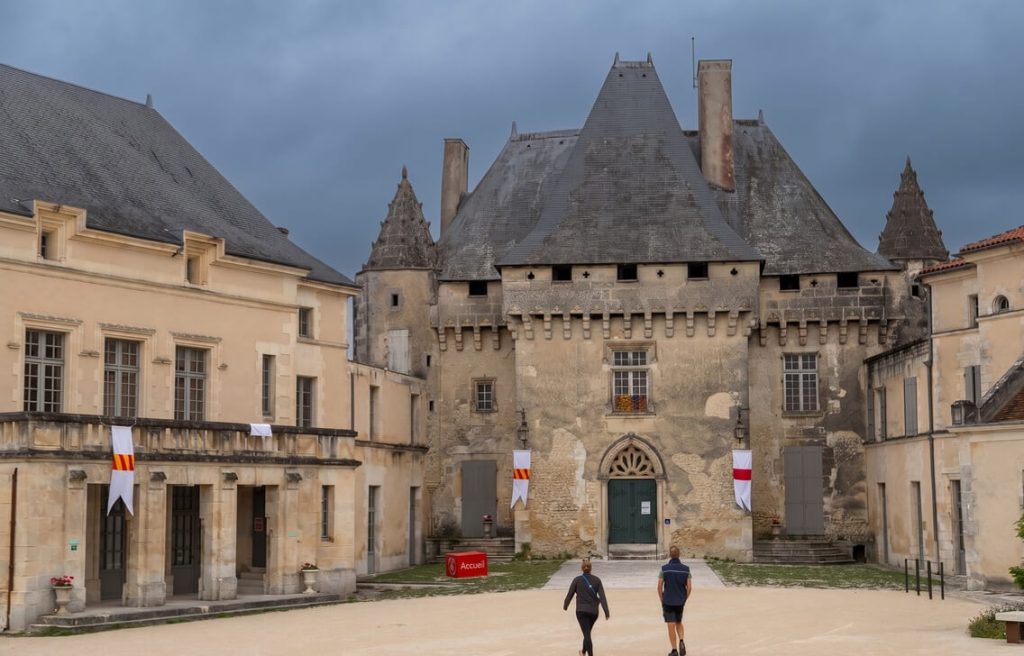
Manoir de Longeveau, a private estate near Aubeterre-sur-Dronne, sits in this pocket of the region and is worth knowing about if you are travelling as a family or larger group. It is a self-catering setup with 35 properties, on-site facilities, and the kind of base that means you are not dependent on finding a good restaurant every evening after a long day of sightseeing.
The Dordogne châteaux are among the best the region of France has to offer. The concentration within a small area makes them accessible in a way that the Loire Valley, spread over hundreds of kilometres, cannot match.
The difficulty is not finding beautiful castles. It is being honest about how many castles your travelling companions actually want to see in a week.
Start with Beynac. Everything else follows from there.
Manoir de Longeveau — 35 self-catering gîtes with heated pools, on-site golf and tennis, minutes from Aubeterre-sur-Dronne.
Browse the gîtes