A trip to Saint-Émilion with children is genuinely doable, and this guide covers exactly how to do it well from a base in the Charente or Dordogne. The short version: book the underground church tour first, ignore the cobblestone panic, and pick your winery carefully. You picture yourself at a sun-drenched chateau, glass of Merlot in hand, while the kids make friends with a grapevine. That version is available.
Getting There from the Charente and Dordogne
Most guides to Saint-Émilion treat it as a day trip from Bordeaux, and for good reason. The direct train from Gare Saint-Jean takes 35 minutes. If you are staying in the Charente or Dordogne region, the picture is different. From Aubeterre-sur-Dronne and the surrounding area, Saint-Émilion sits roughly an hour to an hour and fifteen minutes away by car, depending on your exact starting point.
The drive itself is worth acknowledging. You will cross through some of the most quietly beautiful countryside in southwest France, passing the Dordogne river valley and moving into the rolling vineyard landscape of the Gironde as you approach. It is not a motorway run. It is the kind of route that makes passengers go quiet and look out the window.
If you are travelling without a car and wondering about public transport options, the SNCF train from Bergerac to Saint-Émilion via Libourne is possible but involves connections and takes the better part of two and a half hours each way. For families with young children, the car is the far more practical choice.
Parking is available at the edge of the village. The historic centre is compact and pedestrianised, so you leave the car and walk from there.
Saint-Émilion: What You Need to Know Before You Visit
The village of Saint-Émilion sits on a limestone promontory surrounded by vineyards. It has been producing wine since Roman times and takes its name from an eighth-century Breton monk named Émilion, who came here on pilgrimage, chose to stay, and carved a hermitage into the rock.
The pilgrimage route he travelled was the Camino de Santiago, and the connection to that journey is still visible in the town’s identity and architecture. Recognised as a UNESCO World Heritage Site since 1999, the historic centre is defined by Romanesque and Gothic architecture, narrow lanes called tertres (so steep they have handrails down the middle), and a dense concentration of underground heritage. The monolithic church, carved entirely from a single piece of rock, is the largest of its kind in Europe. Beneath the streets, catacombs, a cloister, and the original cave of the monk Émilion form a network that took centuries to build.
That is the part most guides stop at.
The Saint-Émilion AOC wine region, formally known as the jurisdiction of Saint-Émilion, encompasses around a thousand châteaux and estates. The wines are predominantly Merlot and Cabernet Franc, with some Cabernet Sauvignon. Premier Grand Cru Classé bottles from the top estates are among the most collected wines in the world.
For non-wine-lovers, none of this particularly matters. For wine lovers travelling with children, it matters a great deal, because the wine culture here is woven into everything and understanding it a little makes the visit more rewarding. Grand Cru and Grand Cru Classé designations indicate the quality tiers within that system. You do not need to understand the classification to enjoy a cellar visit, but knowing the rough hierarchy helps when you are choosing which estate to prioritise.
The honest framing for families: Saint-Émilion is not primarily a children’s destination, and pretending otherwise would be misleading. What it is, done right, is one of the few places in southwest France where the adults get something genuinely exceptional and the children get enough to hold their attention. That balance is achievable. It just requires choosing the right things.
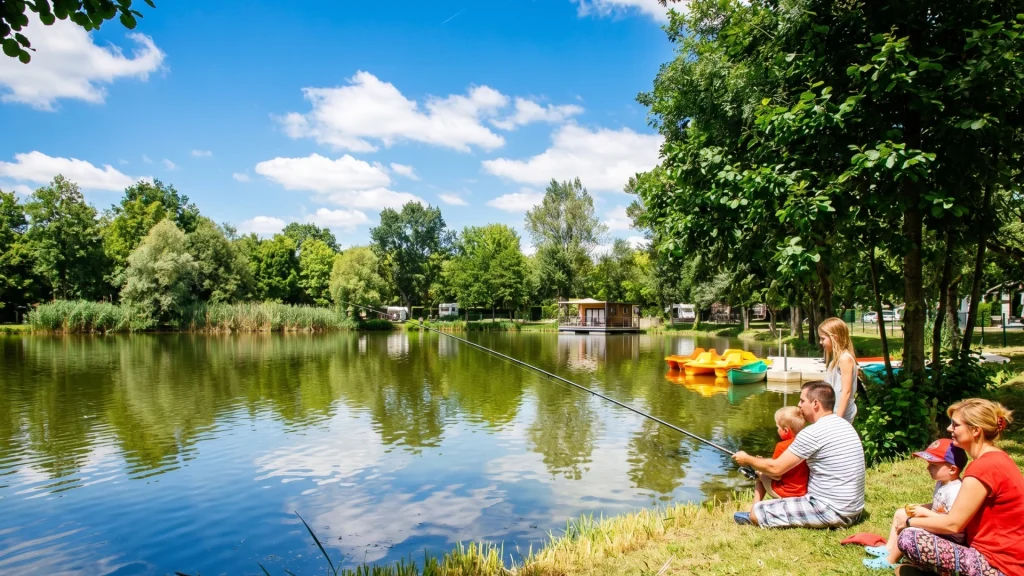
What to Expect with Children in Saint-Émilion
Here is the honest version, because families deserve it.
The things that work well are the walk through the village itself, the underground church tour, a handful of activities that children take to more than you expect, and the food. The things that require more management are the cobblestones. They are everywhere, they are steep in places, and they are uneven.
If you are travelling with a pushchair or a toddler in arms, plan for it. Sturdy footwear for everyone, and expect the cobblestones to slow you down pleasantly rather than annoyingly once you adjust your pace.
Wine tastings at most châteaux are adult experiences. That said, family-friendly wineries do exist, and the better ones provide grape juice for children and activities alongside the tasting so the adults can actually focus. An impromptu visit to a winery with restless children rarely ends well.
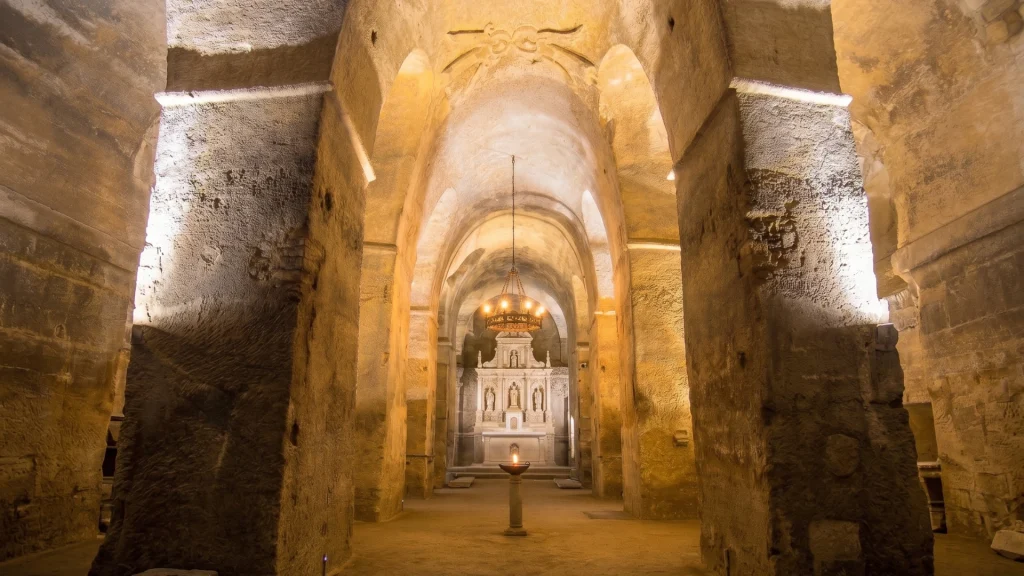
The Underground Church Tour: What Families Need to Know
The monolithic church is the single most distinctive thing in Saint-Émilion, and it is the experience most likely to leave children quietly impressed. Carved from the limestone cliff between the 12th and 15th centuries, it feels nothing like a conventional church. It is dark, cool, and slightly otherworldly.
We have taken guests there who expected a wine village and came out talking about the church. The guided tour takes around 45 minutes and moves through the catacombs and the underground church itself, with the story of the monk Émilion woven through it.
Book the tour at the tourist office when you arrive. Tours run in English and French. It is the right place to start your visit, both geographically (it anchors the historic centre) and practically (it gives the children something concrete to have seen, which sets a positive tone for the rest of the day).
Things to Do in Saint-Émilion That Children Will Actually Enjoy
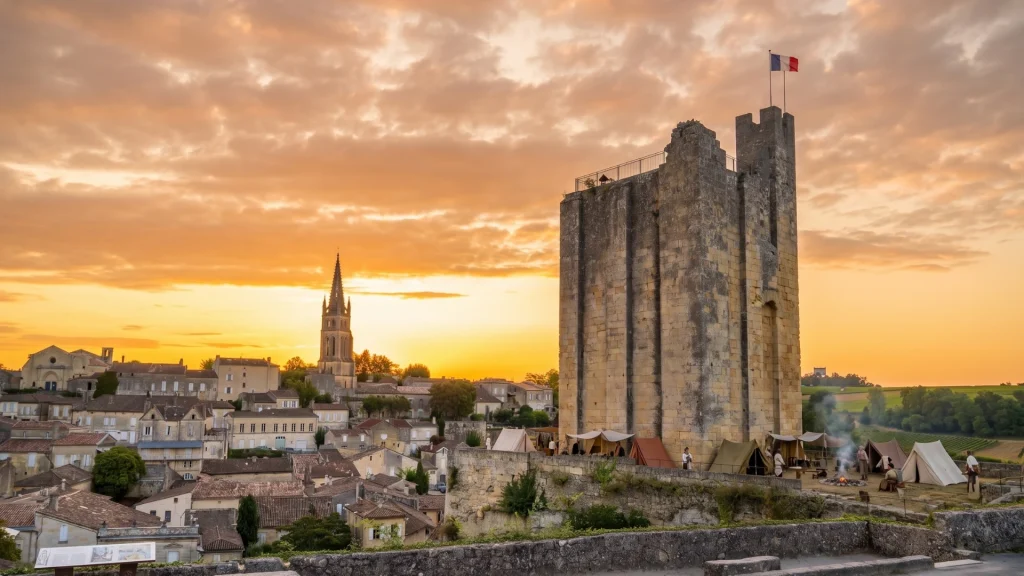
Start with the bell tower. For two euros and around 15 minutes, you can climb the Tour du Roy, one of the oldest structures in the village, to a panoramic view over the vineyards around Saint-Émilion and across to Pomerol. It is a straightforward climb and the view at the top justifies it completely.
The tourist train is the one to prioritise if you have younger children. It runs through the vineyards outside the village, covering the château landscape that most visitors on foot never reach. The circuit takes around 20 to 40 minutes, no walking, no logistics, and views that are better from the train than from the streets. Check availability at the tourism office on arrival.
Worth an hour of anyone’s afternoon: the Cloître des Cordeliers, the ruins of the former Franciscan monastery. The cloister produces a sparkling wine in the traditional method, available to taste or buy at the adjacent wine bar. The ruins are atmospheric to walk through and one of the quieter spots in town.
Older children respond well to Rue Guadet and the old walls. The streets around the Palais Cardinal give a sense of the town’s scale that the main tourist route misses.
The Maison Guadet, home of the Girondin figure Marguerite-Élie Guadet, is part of a more complicated revolutionary history. Worth looking up before you arrive if your children are curious about that kind of thing.
Macarons. Saint-Émilion macarons are their own thing and quite distinct from the Parisian version. They are softer, almond-based, and made according to a recipe that has been here since the seventeenth century. Children tend to approve.
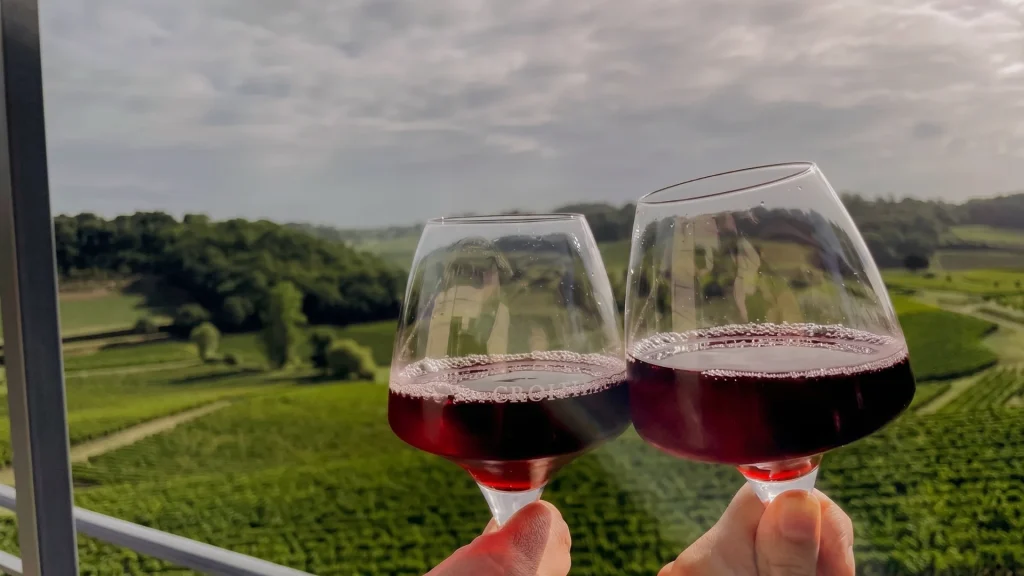
Wine Tastings with Children: How to Make It Work
The assumption that wine tastings and families are incompatible is wrong. It just requires choosing the right estate.
The best option for families is to book a private or small-group wine tour in advance, specifically one that is advertised as family-friendly. These typically include activities for children at the winery while adults do the tasting, and they move at a pace that accounts for shorter attention spans on both sides of the equation.
If you prefer to visit wineries independently, Château Montlabert and several smaller estates within or very close to the village accept visitors who have booked ahead and will accommodate children. The local booking platform Rue des Vignerons lists wineries to visit with details that make it easier to identify which ones are set up for this.
The vineyards around Saint-Émilion are best appreciated on foot or by e-bike if your children are old enough. Bike rental shops in the village offer a range of options including electric bikes. The routes through the vineyards are well-marked and the landscape is flat enough to be manageable. Discovering the vineyards this way is a different experience from a chateau visit, and some families prefer it.
Where to Eat in Saint-Émilion with Kids
Saint-Émilion has enough good restaurants that choosing one is the actual challenge. A few practical notes for families.
Les Grandes Murailles restaurant sits alongside the medieval walls and offers a setting that earns its place as much as the food does. It is not cheap, but the location is unlike anything else in town.
For something more relaxed, the streets around Place du Marché have a cluster of bistros and wine bars where the atmosphere is easy and children are neither stared at nor ignored. Eating at lunch rather than dinner means lower prices, faster service, and children who are still operating at full capacity.
Book ahead for lunch if you are visiting in summer. Saint-Émilion gets very busy between June and September and the better restaurants fill up. This is one of those cases where booking in advance saves the afternoon.
When Is the Best Time to Visit Saint-Émilion?
Spring and autumn are the best time to visit Saint-Émilion with children. Late April through June offers good weather, manageable crowds, and vineyards in active growth. September and October bring the harvest, which is dramatic to see in person, and the light in the Bordeaux wine country in autumn is genuinely remarkable. If you can go in October, go in October. Most people visiting from the UK have already gone home by then and the village behaves like itself again.
July and August are busy. The village gets crowded, the cobblestones feel hotter underfoot, and popular tours and restaurants require further advance booking. It is still doable in summer, but it takes more planning.
The village is quieter in winter but some smaller wineries reduce their hours or close between December and February. Check ahead if you are visiting out of season.
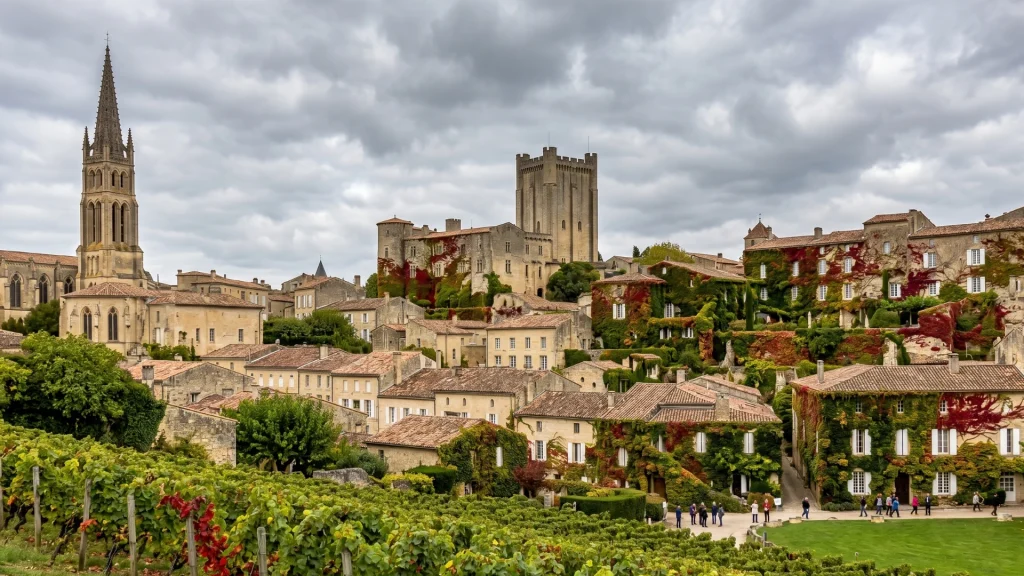
Day Trip or Overnight Stay in Saint-Émilion?
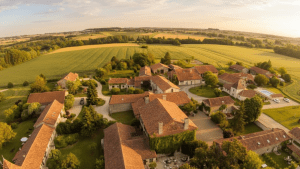
A day trip from the Charente or Dordogne takes around an hour by car each way, leaving a full day in Saint-Émilion comfortable for the underground church, lunch, and the bell tower. If you are looking for a family-friendly base in the Charente to day-trip from, Longeveau sits roughly an hour from Saint-Émilion with pools, a playroom, and everything set up for children.
You can be in Saint-Émilion by mid-morning, cover the underground church, lunch, the bell tower, and a walk through the vineyards, and be back for early evening.
If you want to stay the night, Saint-Émilion has hotel options ranging from well-positioned guesthouses in the village itself to larger château hotels in the surrounding vineyard landscape. Staying overnight allows you to see the village in the evening when most day-trippers have left, which is a different experience entirely. The streets empty out, the light changes, and the place reveals a quieter version of itself that is worth seeing at least once.
For families on a first visit, a day trip covers everything that matters. The overnight version is there when you want to see what the village looks like when the crowds have gone home.
What to Know Before Visiting Saint-Émilion with Kids
The tourist office is at Place du Clocher at the top of the village and should be your first stop. It handles booking for the underground church tour, has maps, and can advise on what is running on the day you visit.
The village gets very hot in summer afternoons. Start early, take a long lunch, and avoid the two-hour stretch either side of midday if you have young children with you.
Water fountains are limited. Bring your own.
Car parks fill up at peak times in summer. Arriving before 10am avoids the worst of it.
Credit cards are accepted at most restaurants and châteaux, but smaller stalls and the macarons shops often prefer cash. Worth having both.
Plan Your Saint-Émilion Family Day Trip
Saint-Émilion is not a theme park and it does not need to pretend to be one. What it offers families is something different: a place with real layers, where the history is embedded in the ground you are walking on and the wine in the glass has a direct relationship with the landscape around you.
Children sense authenticity before they can name it. A village that has been continuously occupied since Roman times, where a monk carved a church from a cliff face and the grapes from that same limestone hill have been producing Bordeaux wine for thirteen centuries, is a place that leaves a mark.
Book the underground church tour before you leave the house, not when you arrive. Eat at lunch. The rest will sort itself out.
If you are based near Aubeterre-sur-Dronne and want to plan more days like this one, our guide to a day out in Aubeterre-sur-Dronne covers what to see, where to eat, and how long to allow for the village on your doorstep.
FREQUENTLY ASKED QUESTIONS
Is Saint-Émilion good for families with young children?
Better than most wine destinations, yes. The underground church tour holds children’s attention in a way that a conventional château tasting never would. The tourist train covers the vineyard landscape without requiring anyone to walk through it. The village is compact. The cobblestones are the main thing to plan around: sturdy footwear, and a carrier rather than a pushchair for younger ones.
How far is Saint-Émilion from the Charente region?
From Aubeterre-sur-Dronne, roughly an hour to an hour and fifteen minutes by car. The drive takes you through the Dordogne valley before moving into the vineyard landscape of the Gironde. It is not a difficult drive.
Do you need a car to visit Saint-Émilion?
From Bordeaux, no. The direct train from Gare Saint-Jean takes around 35 minutes and is the obvious choice for a day trip from the city. From the Charente or Dordogne, a car is the practical answer. Public transport involves multiple connections and takes the better part of three hours each way, which is too long with children.
What is Saint-Émilion famous for?
Wine, primarily. It is one of the four major Bordeaux wine regions, built on Merlot and Cabernet Franc, and home to some of the most sought-after bottles in the world. The village itself is a UNESCO World Heritage Site, which sounds like a marketing line until you stand in the underground church and realise it was carved from a single piece of limestone over three centuries. The wine and the history are harder to separate here than in most places.
When is the best time to visit Saint-Émilion?
October. The crowds from summer are gone, the harvest is finishing, the light is exceptional, and the village is quieter than at any other point in the season. Late spring is the second choice. Avoid July and August unless you have no option.
How long do you need in Saint-Émilion?
A full day is comfortable. Budget around 45 minutes for the underground church tour, 15 minutes for the bell tower, an hour for lunch, and an hour or so to walk the vineyards and the village streets. That leaves room for macarons, slower children, and a glass of wine without feeling rushed. Total time for a comfortable full visit runs around four to five hours, which puts you back in the Charente by mid to late afternoon. Half a day is possible if you are arriving late morning, but you will need to choose between the vineyards and the underground tour rather than doing both.