Yes, the Dordogne is genuinely brilliant for families. It has mediaeval châteaux you can climb inside, rivers calm enough for a five-year-old to paddle, prehistoric caves that make children go very quiet, and enough open countryside and forested hillside to exhaust the kind of energy that builds up over a school year. It works across the full range of ages: the two-year-old who needs to touch everything, the eight-year-old who wants to be doing something at all times, and the adult who also needs the holiday to feel like a holiday.
Most guides to the Dordogne with kids recycle the same ten activities in a different order. Canoe trips, Lascaux, the big châteaux. All of those are here because they earn their place. But there is considerably more to the Dordogne Valley than the standard list, and this guide covers it honestly, with notes on which ages each activity actually suits. There is a dedicated section for older kids aged 8 to 12 who want something more active than a guided cave tour: hiking trails, treetop adventure parks, via ferrata, and the family-friendly vineyard angle that most Dordogne guides ignore entirely.
Staying nearby? Manoir de Longeveau is a private family estate near Aubeterre-sur-Dronne on the Charente-Dordogne border, with self-catering cottages and villas designed from the ground up for families. See what’s available here.
Is the Dordogne Good for Families with Young Kids?
It is one of the best regions in France for families with kids of all ages and one of the most consistently underestimated. People tend to associate the Dordogne Valley with wine, foie gras, and adults making slow circuits of mediaeval villages. All of that is true and sits comfortably alongside some of the most child-friendly days out you will find in southwest France.
What genuinely surprises families visiting for the first time is how well the Dordogne works for toddlers. A lot of coverage of the Dordogne with kids leans heavily on canoeing and cave tours, both of which have minimum age requirements or demand a level of patience that a three-year-old cannot reliably provide. But underneath those headline activities is a whole layer that works perfectly for younger children: Barbary macaque reserves, living history parcs, Gabarre boat rides, lake beaches, and gardens with enough paths to keep a toddler genuinely absorbed for an afternoon.
A family with a real mix of ages, from babies to teenagers, can fill a week in the Dordogne without repeating anything or requiring anyone to compromise. That is not something you can say about many holiday destinations.
One honest note before you start planning: you need a car. The Dordogne is rural France at its most picturesque, and the distances between key attractions are not walkable. From a base on the Charente-Dordogne border, most of the main sites are 30 to 50 minutes’ drive. That distance becomes part of the experience fairly quickly, because the roads are quiet and the countryside you pass through is genuinely beautiful.
Canoeing the Dordogne and Vézère Rivers
Good for: ages 5 and over | Toddlers: try the Gabarre boat ride instead
Canoeing the Dordogne River is one of those activities that sounds like the sort of thing you feel obliged to do and turns out to be genuinely the best day of the holiday. You hire a four-person family canoe or kayak, get dropped upstream, and spend the afternoon drifting at your own pace past limestone cliffs, village rooftops, and châteaux that appear around corners as if someone placed them there deliberately. From the water you understand what makes this valley different: the cliffs rise vertically from the bank, and everything important in the Dordogne, every castle, every village, every cave, seems to be built either into or on top of the rock.
The classic stretch runs between La Roque-Gageac and Beynac. The current does most of the work. You are paddling mainly to steer. Children as young as five find it manageable, and the lack of a fixed itinerary is what makes it work so well for families: you beach up on a gravel bank when someone needs a snack or a paddle in the shallows and carry on when everyone is ready. No queue to keep up with. No scheduled end point.
The Vézère River, which runs through the northern part of the region past Les Eyzies, is another option for canoe trips, particularly for families basing themselves in the northern Périgord. Quieter and less touristed than the main Dordogne stretch, with its own limestone scenery and cave-cut cliffs along the banks.
The caveat that matters: most canoe and kayak hire companies require children to be at least five years old. A few will accommodate younger children in a larger Canadian canoe with a parent, but confirm when you book rather than assuming. If you are travelling with toddlers, the Gabarre boat rides from Beynac are the answer. These traditional flat-bottomed boats carry passengers along the same stretch of river in complete comfort, with no paddling required, no minimum age, and views of the Dordogne valley identical to what you would see from the canoe. Life jackets are available for all sizes. It is a different experience from canoeing but a genuinely good one, and toddlers who would not last ten minutes in a canoe tend to be perfectly content on a Gabarre.
Book canoe and kayak hire well in advance for July and August. Canoë Vacances in La Roque-Gageac is well regarded, with good English-language service and solid equipment.
The Prehistoric Caves of the Dordogne Valley
Good for: ages 6 and over | Toddlers: the darkness and enclosed spaces are usually too much
The Dordogne Valley and the Vézère Valley that joins it near Les Eyzies sit above the densest concentration of prehistoric cave art in Europe. For families making a trip to the Dordogne, visiting at least one cave is close to essential. Not because it is on every list. Because there is genuinely nothing else in the world quite like standing in front of a painted wall that a person made 17,000 years ago in the light of a fire.
The framing matters enormously for children. “Let’s look at some old paintings” produces glazed expressions. ” Let’s see what people drew on these walls when woolly mammoths were still alive and the only light they had was fire” produces something closer to genuine attention.
Lascaux IV, near the village of Montignac, is the best starting point for families visiting the Dordogne with kids. The original cave was closed to preserve the cave paintings, and the replica built at Lascaux IV is extraordinary in its own right. The International Cave Painting Centre around it is one of the best-designed family museums in France, with immersive sections that hold children’s attention in a way that most museums do not. Allow a full half-day and eat there. Worth it.
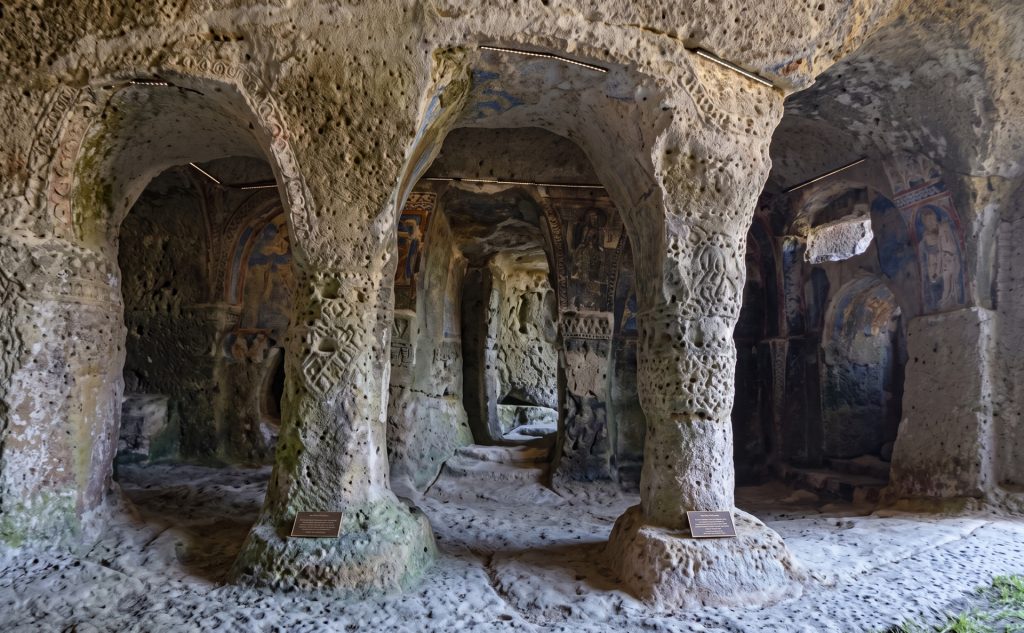
La Roque Saint-Christophe, near the Vézère river and Les Eyzies, is a troglodyte cliff settlement carved into a limestone cliff face rather than a painted cave. Children can move through the chambers, handle replica tools, and understand what it actually meant to live inside the rock. More physically engaging than a standard cave tour, and the scale of the cliff makes an impression on younger children who might not yet fully grasp the prehistoric context.
Font-de-Gaume, near Les Eyzies, is one of only a handful of caves in the world where you can still see authentic polychrome cave art open to the public. Visitor numbers are kept deliberately small, which means the experience is quiet and extraordinary rather than crowded and rushed. Book weeks ahead in peak season. This one is for children who are old enough to stand still, be genuinely impressed, and remember it.
The Best Châteaux to Visit with Kids in the Dordogne
Good for: ages 5 and over | Toddlers: outdoor grounds usually work well; interior tours are harder
There are over a thousand castles across the Dordogne. Most are best admired from the river or the road. Three are worth going inside with children.
Château de Castelnaud is the one to prioritise on any family trip to the Dordogne. It was a working military fortress throughout the Hundred Years’ War, and the museum inside focuses on mediaeval warfare: trebuchets, siege engines, swords, armour, and the tactics of mediaeval siege. The catapult and trebuchet demonstrations in summer are a proper set piece, not a token gesture, and children who would glaze over in a château full of 18th-century furniture find themselves genuinely absorbed at Castelnaud. The fortification sits high above the Dordogne River, and the views from the battlements across the Dordogne Valley are among the best in the region. Budget at least two hours.
Château de Beynac perches on a limestone cliff above the village and is reached by a steep climb that becomes part of the experience. The audio guide actually tells you things worth knowing about mediaeval warfare and the history of the Dordogne. The château has been restored carefully to look as it would have in the Middle Ages, which makes it considerably easier for children to imagine than a château filled with furniture from centuries later.
Château des Milandes was home to American performer Josephine Baker from 1947, making it unlike any other château you will visit in the Dordogne. The daily bird of prey displays in the gardens are one of those things that children remember long after the rest of the trip has blurred together. Garden paths are accessible with a pushchair on the main routes, and there is a restaurant on site for lunch.
La Forêt des Singes, Rocamadour
Good for: all ages, including toddlers
La Forêt des Singes is a Barbary macaque reserve near Rocamadour where over 150 macaques roam freely through a forested enclosure, moving along the paths beside visitors, sitting in the trees overhead, and taking food from your hand if you are patient enough. You are given popcorn at the entrance. The macaques come and go as they please. The experience is as unhurried as they are.
For toddlers, this tends to be the single most memorable thing about a Dordogne family holiday. Not because it is the most spectacular activity on the list. Because the macaques are genuinely present, unafraid, and endlessly watchable at exactly the height a small child can see. The reserve’s main paths are firm enough for a pushchair, and there is a picnic area for families who want to make a half-day of it. Plan at least two hours; most families wish they had planned three.
The Barbary macaque is an endangered species, and La Forêt des Singes operates as a conservation reserve as much as a visitor attraction. The connection to Morocco and Africa, explained well on site, gives older children something to think about beyond the experience itself.
Rocamadour, the pilgrimage village that climbs a sheer limestone cliff face in tiers above a canyon in the Lot, is worth combining into the same day. It is one of the most visually striking places in southwest France, and children old enough to process the strangeness of a village built vertically up a cliff tend to be genuinely stopped by it. Toddlers are perfectly happy being carried through.
Le Bournat Living History Parc, Le Bugue
Good for: all ages; particularly strong for toddlers and under-8s
Le Bournat, near Le Bugue, recreates a Périgord village from the turn of the 20th century. Farm animals, vintage fairground rides, craft workshops covering bread-making, glass-spinning, and pottery, and interactive demonstrations running throughout the day. It works on several levels at once: younger children respond to the animals and the rides; older ones engage with the workshops; adults find the atmosphere charming rather than tedious.
Bring a picnic. The grounds are large and well shaded, with picnic tables throughout, and the parc is genuinely designed for families who want to stay all day rather than move on after a few hours. Some summer dates include evening events and fireworks, worth planning around if your dates allow it.
Le Bugue, the small town nearby, is a quieter alternative to Sarlat for a lunch stop and gives a better sense of everyday Périgord life than the more heavily touristed villages further east.
Marqueyssac Gardens and the Labyrinth
Good for: ages 3 and over; pushchair-accessible on main paths
Marqueyssac is a formal garden perched on a cliff above the Dordogne River, famous for its sculpted boxwood hedges that form a labyrinth across several acres of hillside. For adults, it is a genuinely beautiful place to spend a morning. For children, it is a vast garden full of paths to disappear into, hidden corners, and the kind of green tunnels that make any child with a functioning imagination immediately want to run.
The main paths are accessible with a pushchair on firm ground. The wilder sections involve steps and loose gravel, so a carrier is useful if you have a very young child and want to reach the far ends of the estate. On Thursday evenings in July and August, Marqueyssac stays open late, and the entire garden is lit by thousands of candles. One of the more reliably memorable things you can do in the Dordogne, and children old enough to appreciate the scale of it tend not to forget it.
Allow an hour and a half for a relaxed visit, longer if anyone in your group wants to actually sit and look at the view.
River Swimming, Lake Beaches, and Water Parks
Good for: all ages, including toddlers
River swimming in the Dordogne is free, unhurried, and consistently what families say they remember most when they get home. More than the châteaux, more than the caves, more than the ticketed attractions. In summer the Dordogne River runs slowly, and the shallows along the natural gravel beaches are safe for young children. The water is clear enough to see the riverbed. Locals treat it as a matter of course. Most first-time visitors miss the best spots entirely because they are not signposted and not in any guidebook.
Beach up near Vitrac, just downstream from Domme, for a particularly good stretch. The bank is wide, the water is gentle, and it is the kind of afternoon that goes on longer than you planned without anyone complaining.
For families who want something more structured, Lac de Pombonne north of Bergerac is a freshwater lake with a sandy beach, lifeguards in high season, water shallow enough that even cautious parents can genuinely relax, and a small restaurant on site. Entry is free. It takes about ten minutes to set up and then takes care of the afternoon.
For water slides and structured water park attractions, Aux Etangs du Bos near Audrix has pools at several depths, an inflatable lake course, and a range of slides for different ages. A full day out, particularly for kids aged five to twelve who need more stimulation than a river beach provides.
Cycling the Greenway as a Family
Good for: ages 5 and over on their own bikes; all ages with tag-alongs or cargo bikes
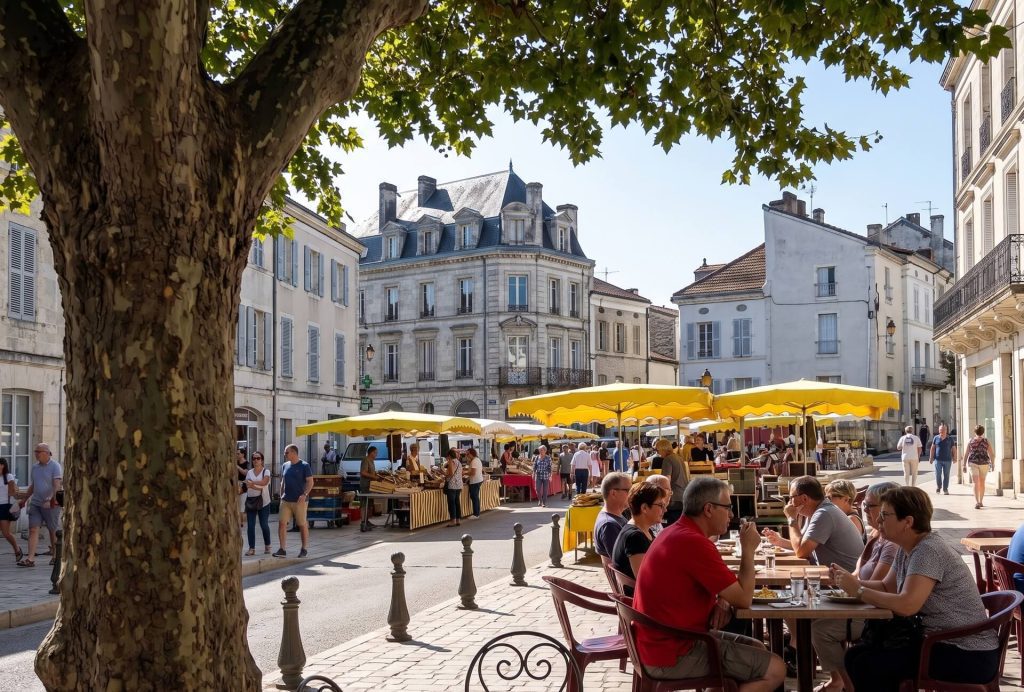
The Sarlat Voie Verte is a 29-kilometre greenway running through tunnels and along the river through a stretch of Périgord countryside that earns its place rather than just being the backdrop. The trail is well-surfaced, car-free, and flat enough that children who are reasonably confident on a bike find it manageable. The section closest to Sarlat is the most accessible for families and easy to cut short if legs give out before enthusiasm does.
Several hire companies will deliver bikes directly to your holiday rental or campsite, which matters considerably when you have young children and no roof rack. Velodulot is one of the established options for direct delivery in the area.
The Vézère valley also has quieter lanes well-suited to family cycling for those basing themselves in the northern Dordogne. The roads through the river valley are genuinely quiet outside high season, and the scenery along the river is as good as anything in the region.
Active Outdoor Activities for Older Kids (Ages 8 to 12)
Good for: ages 8 and over | Not covered elsewhere in this guide
The activities above work across a wide age range, and most of them have something for an eight or ten-year-old. But older children who want more physical challenge and less “stand here and look at this” need a different set of options. The Dordogne has them. Most Dordogne guides do not cover them well, which is why families with older kids sometimes feel the region is primarily aimed at toddlers and history enthusiasts. It is not.
Accrobranche: treetop rope courses
Accrobranche is everywhere in the Dordogne and consistently one of the activities older children remember most clearly. The courses are set high in the forest canopy, with zip lines, rope bridges, and climbing sections graded by difficulty so that an eight-year-old and a twelve-year-old can be on the same site without one of them being bored and the other being terrified.
AirParc near Sarlat is one of the best-regarded in the region, with courses running alongside the Dordogne River itself. Most sites provide full harness equipment and a safety briefing; children need to meet a minimum height rather than a minimum age, usually around 1.10 metres for the lower grades. A half-day is the standard format. Most children come out wanting to go again.

Via ferrata on the limestone cliffs
Via ferrata routes in the Dordogne are fixed into the limestone cliff faces that define the region, and the combination of the climbing and the views is unlike anything else available here.
The routes near Cazals and in the Célé valley, a short drive east, are graded for families with children from around age eight upwards, provided they are comfortable with heights.
You hire equipment locally and go at your own pace. The view from mid-route, looking across the valley with the river below, is the kind of thing that lodges permanently in a child’s memory. More demanding than accrobranche, but not technical climbing; most parents with moderate fitness can manage it alongside their children.
Hiking trails graded for families with older kids
The Dordogne has a dense network of marked trails, but the useful distinction for families with older children is between the gentle village-circuit walks that work for toddlers and the more substantial half-day routes that give a ten-year-old something to properly work for. The trails above the Vézère valley near Les Eyzies are well marked and combine good walking with views of the cliff settlements and cave sites from above, adding a layer of context that the cave tours themselves cannot provide. The GR36 long-distance path runs through some of the most scenic parts of the Périgord Noir and can be walked in day sections from a base in the Sarlat-Bergerac corridor without needing overnight kit.
For a shorter but genuinely impressive route, the circular walk from Domme down to the river and back up through the village is achievable for most children aged eight and over and delivers views across the Dordogne valley that justify the climb several times over. Allow three hours and bring water. The ascent back into Domme in summer heat is the part that tests everyone’s goodwill.
Family-friendly vineyards near Bergerac
Almost no Dordogne family guide covers this, which is exactly why it is worth knowing about. The Bergerac wine region begins roughly 30 minutes west of Sarlat and produces some of the best-value wines in southwest France. Several estates have started running family visits specifically because so many of their guests arrive with children and want to include a vineyard without abandoning the people who cannot drink the product.
Château de Tiregand near Creysse and Château les Miaudoux near Sigoulès both offer vineyard walks and tastings where children are accommodated properly rather than tolerated reluctantly: grape juice and local soft drinks alongside the adult tasting, the vineyard itself interesting to walk through, and the surrounding countryside some of the most quietly beautiful in the region. Neither requires advance booking for a casual summer visit, but calling ahead means you get a guided walk rather than a self-guided wander.
For families staying in the Sarlat-Bergerac corridor, combining a vineyard visit with lunch in Bergerac and an afternoon at Lac de Pombonne makes one of the more satisfying full-day combinations in the region: something adult, something outdoor, and water for the children, all within 40 minutes of each other.
Limeuil and the Beautiful Villages of the Dordogne
Good for: all ages; a natural add-on to a canoe or river day
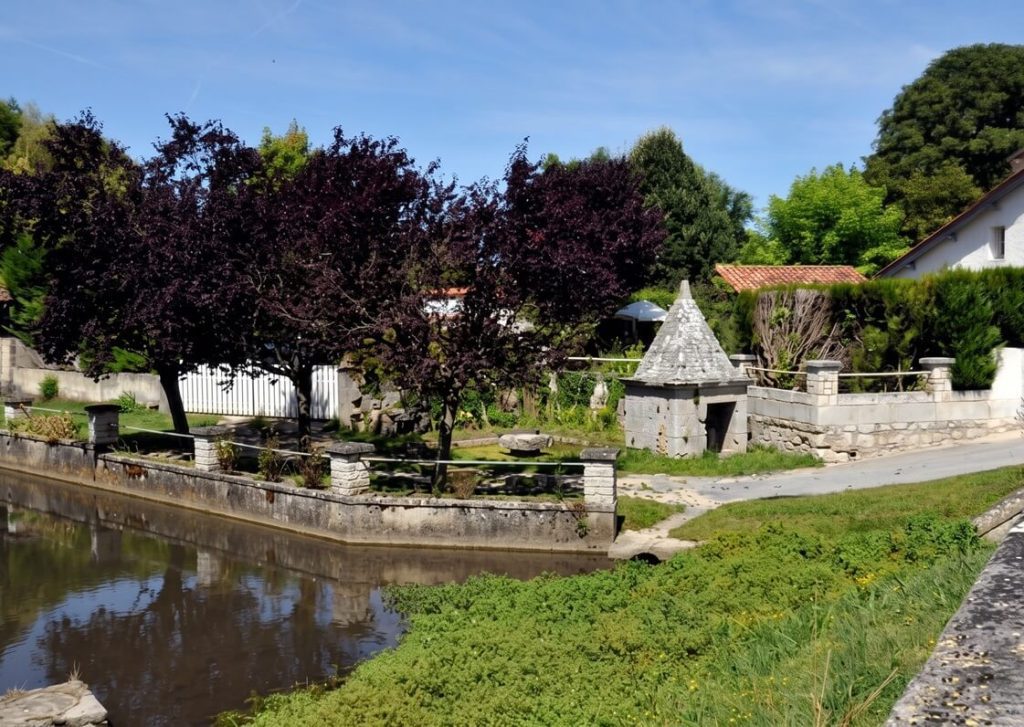
Limeuil sits at the point where the Vézère meets the Dordogne, on a hillside above the confluence, and it is one of those places most families stumble across and immediately wish they had planned more time for. The village is classified as one of the most beautiful villages in France, which covers a lot of ground nationally, but in this case, it is genuinely earned. The gardens at the top of the village look out across both rivers and the valley, and children tend to run straight onto the lawns without any encouragement.
Limeuil works best combined with a canoe day or a swim at the confluence below the village, where the two rivers meet in a wide, shallow stretch that suits families with young children well.
Sarlat-la-Canéda is the most visited town in the Dordogne and worth at least half a day: the mediaeval centre is compact, walkable, and impressive enough that even children who claim not to care about old buildings tend to be quieted by it. Go on a Wednesday or Saturday morning for the market, which fills the streets with local producers and is one of the more genuinely alive food markets in southwest France. Bergerac to the west is a good alternative base for families wanting to stay away from peak-season crowds while keeping the full Dordogne valley accessible.
La Roque Saint-Christophe
Good for: ages 5 and over
La Roque Saint-Christophe is a troglodyte cliff fortress carved into a limestone cliff face above the Vézère river and one of the most atmospheric sites in the Dordogne. The settlement was occupied continuously from prehistoric times through to the 16th century, and the scale of what was carved into the cliff, terraces, chambers, and fortifications, as well as the evidence of an entire community living in the rock, is extraordinary when you see it in person.
For children it is more engaging than a standard château visit because it is spatial and physical rather than decorative. They can walk through the carved-out spaces, stand on the terraces above the Vézère valley, and understand the strategy of living in a cliff face in a way that requires no explanation. Guided tours are available in English and add real depth to the visit. Allow 90 minutes.
Rainy Day and Hot Day Options
The Dordogne is primarily an outdoor destination. On the occasional day when the heat in July or August reaches 38 degrees or the weather closes in, it helps to have a plan that does not involve driving around hoping something is open.
For rainy days: Le Bournat works in most weather because the workshops and covered areas mean you are not dependent on sunshine. Lascaux IV is fully indoors and absorbing enough for a long morning. The Périgord Noir Aquarium in Le Bugue is a reliable option for younger children, with a freshwater aquarium covering fish, crocodiles, and a vivarium, and feeding activities that hold a toddler’s attention better than most indoor experiences of equivalent size. The Prehisto Parc near Les Eyzies has outdoor sections and covered areas and works well as a gentle introduction to prehistory for younger children before tackling the actual caves.
For extremely hot days, the river beaches and lake beaches are the answer. The Dordogne river stays refreshing well into August. A pattern that works consistently across most family holidays here is châteaux and cave visits in the cool of the morning, and river or lake from midday onwards. Not a complicated formula, but it makes a significant difference to how the days feel and how much goodwill survives to the evening.
Free Activities Worth Knowing About
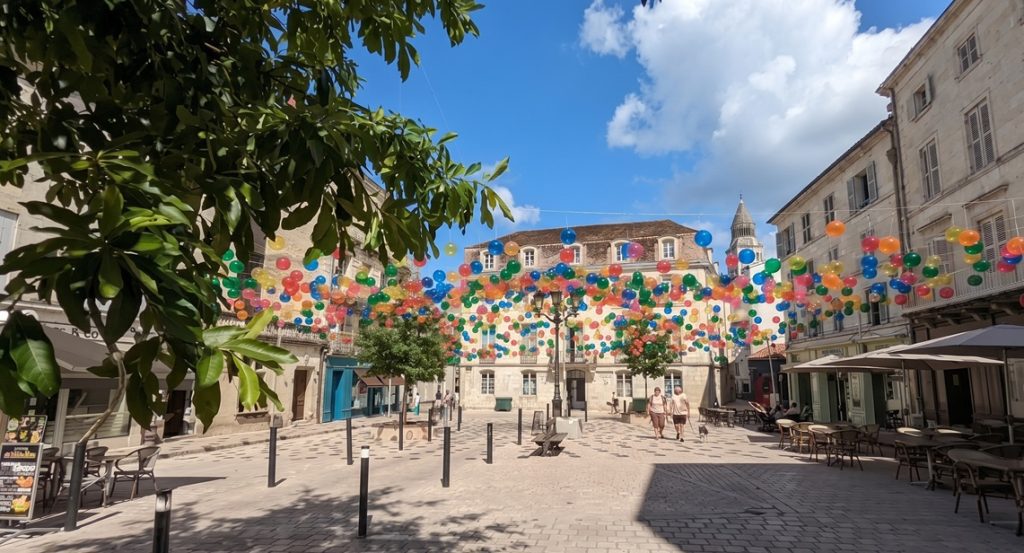
A family trip to the Dordogne does not have to be expensive every single day. Some of the most straightforward things you can do throughout the Dordogne cost nothing at all.
River swimming at any of the natural beaches along the Dordogne River is free. Lac de Pombonne is free. The Terra Aventura trails are app-based treasure hunts that guide families through towns and villages across the Dordogne, with puzzles to solve and virtual treasures to collect along the way. Free to download and use, and one of those ideas that sounds small and turns out to carry an entire afternoon. Children who would walk through Domme or La Roque-Gageac, barely glancing up, become suddenly invested when there is a hunt to complete.
The Dordogne villages themselves cost nothing to walk through and are worth more time than most families give them. Beynac, La Roque-Gageac, Limeuil, Saint-Léon-sur-Vézère. The weekly markets in Sarlat, Issigeac, and Périgueux are particularly good with young children: food, colour, noise, and room to wander, in a way that most ticketed attractions cannot replicate.
Where to Stay in the Dordogne with Kids
Self-catering is the right call for almost every family visiting the Dordogne. A kitchen, outdoor space, somewhere for children to be outside without constant supervision, and the freedom to eat on your own schedule matter here far more than hotel amenities. You will almost certainly cook half your meals in any case, because the markets and local producers make it easy and the results beat most restaurants at any price point.
Manoir de Longeveau is a private family estate near Aubeterre-sur-Dronne, sitting on the Charente-Dordogne border and within reach of the main attractions in both directions. The estate has been welcoming families since 1992 and has been designed with children in mind from the beginning: secure outdoor grounds, a range of properties from smaller cottages to larger villas that suit different group sizes, a heated pool, tennis, and activities on site so that not every day requires a long drive somewhere.
For multi-family groups or extended family holidays, Longeveau works especially well because the whole party can be on the same estate across multiple properties. Children have the run of the grounds between day trips. Adults have the option of a quiet evening without going anywhere. The main sites of the Dordogne valley are accessible as day trips from here, and the Charente countryside immediately around the estate is quiet, beautiful, and largely undiscovered by the peak-season crowds that fill Sarlat in July and August.
See accommodation at Manoir de Longeveau and check dates.
Practical Planning Tips
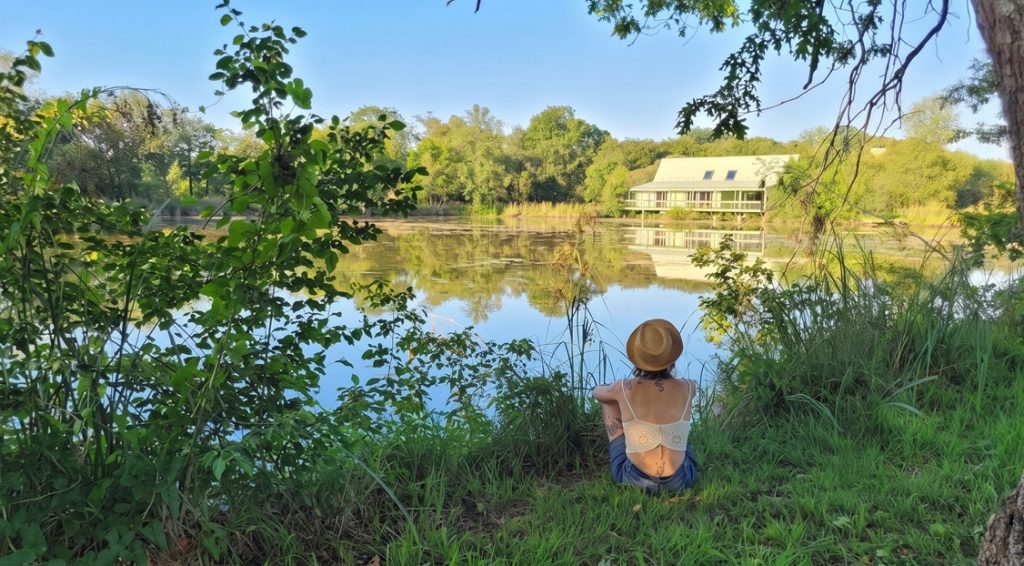
Best time to visit the Dordogne with kids: May, early June, and September are the sweet spots. The weather is reliably warm, all the main attractions are open, and the roads, car parks, and canoe hire queues are noticeably quieter than peak summer. July and August are hotter and busier. If school holidays mean that is when you go, early mornings and late afternoons are your best windows for outdoor sites, and booking everything in advance is essential rather than optional.
Getting there from the UK: Most families drive, taking the Eurotunnel from Folkestone or a ferry from Dover or Cherbourg and heading south. From Calais, the Dordogne is roughly eight to nine hours: manageable over two days, and a journey that becomes significantly easier if you build in a night somewhere around the Loire. Direct flights to Bergerac from several UK airports operate in summer and cut the travel considerably if the drive does not appeal.
Getting around: A car is not optional. Distances between attractions are typically 20 to 45 minutes. Most major sites have reasonable parking. Sarlat in July and August requires patience and an early start if you want a space within walking distance of the old town.
Heat: High summer in the Dordogne regularly reaches 35 to 38 degrees during the middle of the day. Pack significantly more sun cream than you think you need, bring a good hat for everyone in the group, and plan outdoor activity for the early morning or early evening. The heat, properly managed, is part of what makes the holiday feel like a genuine escape from a British or Irish summer. Mismanaged, it makes every afternoon a negotiation.
FAQ
What are the best outdoor activities in the Dordogne for older kids aged 8 to 12?
Accrobranche treetop courses (AirParc near Sarlat is the place to start), via ferrata on the limestone cliffs, longer walking trails above the Vézère valley, and family-friendly vineyard visits near Bergerac. Most of these are within 40 minutes of each other in the Sarlat-Bergerac corridor, and almost none of them appear in standard Dordogne family guides.
Is the Dordogne good for toddlers?
Yes, genuinely. The Gabarre boat rides, La Forêt des Singes, Le Bournat, river swimming, Lac de Pombonne, and the Marqueyssac Gardens all work well for under-fives. The key is a base with secure outdoor space so toddlers have somewhere to be between days out rather than being transferred from car seat to attraction all week.
What is the minimum age for canoeing in the Dordogne?
Five, for most hire companies. A few will take younger children in a larger Canadian canoe with a parent alongside them, but confirm when you book. If you have toddlers, the Gabarre boat rides from Beynac cover the same stretch of river with no age restriction and are genuinely worth doing.
Is the Dordogne river safe for children to swim in?
Yes. In summer the river runs slowly, and the natural river beaches have calm, clear shallows that work well for young children. Lac de Pombonne near Bergerac has lifeguards in high season and is one of the most straightforwardly easy swimming spots in the region. Check local conditions before swimming anywhere.
What is the best château in the Dordogne for children?
Château de Castelnaud. The museum covers mediaeval warfare with trebuchet and siege engine demonstrations in summer, and the views from the battlements are among the best in the valley. Children who find most châteaux dull tend to find Castelnaud properly interesting. Nothing else in the region comes close for this age group.
How far is the Dordogne from the Charente?
From Aubeterre-sur-Dronne on the Charente-Dordogne border, the main valley attractions are 30 to 60 minutes by car. Quieter base, same access.
What is the best time of year to visit the Dordogne with kids?
May, early June, or September. Warm enough, fully open, and significantly less crowded than July and August. If peak summer is your only option, book everything in advance and plan outdoor activity for the cooler parts of the day.
Most families who visit the Dordogne say the same thing on the way home: they wish they had stayed longer. Plan one more day than you think you need. The week fills itself.
Find your base at Manoir de Longeveau and start planning your family trip to the Dordogne.
Manoir de Longeveau — 35 self-catering gîtes with heated pools, on-site golf and tennis, minutes from Aubeterre-sur-Dronne.
Browse the gîtes