When couples start looking for a wedding venue in France, the search usually splits fairly quickly into two directions. On one side there are the châteaux: grand, historic, visually unmistakable. On the other are the private estates, often former agricultural or wine-producing properties, that offer something quieter and, in many ways, more liveable. Both can make extraordinary settings for a wedding. But they are genuinely different experiences, and the choice between them matters more than most people realise when they’re still in the early stages of planning.
This is an honest comparison of both. Not a list of pros and cons with ticks and crosses, but a real look at what each type of wedding venue in France actually involves, so you can make a decision based on what your wedding actually needs rather than what looks most impressive in photographs.
What We Actually Mean by Château and Private Estate

The terminology used in French wedding venue searches is looser than it appears. The word château technically means any sizeable country house or manor, and many properties market themselves as châteaux that are, in practical terms, stone manor houses or renovated estates. Equally, some private estates are grander and more imposing than buildings that carry the château label.
For the purposes of this comparison, the distinction worth making is not really about architecture. It is about the type of experience each venue is set up to deliver. A château in the traditional wedding venue sense tends to be a grand, formally dressed historic building with reception halls, elaborate gardens, and a certain theatrical quality to the setting. A private estate, particularly a former agricultural or wine-producing property, tends to offer something more self-contained and residential in character. The buildings are usually stone, the grounds feel used rather than ornamental, and the overall atmosphere leans toward a place people actually live rather than a place designed to impress.
Both can be booked on an exclusive-use basis. Both can accommodate large groups. The differences lie in what the experience actually feels like from arrival through to the morning after.
The Atmosphere: Grand and Formal vs Relaxed and Lived-In

This is the difference most couples notice first and remember longest. A traditional château wedding has a particular quality: it is theatrical in a way that is genuinely beautiful. Walking through formal French gardens, holding a ceremony in a room with painted ceilings and chandeliers, dining at long tables under the kind of architecture that took centuries to accumulate. These experiences are real and they are special.
But that theatricality comes with a texture. A formal château is a setting that makes an impression rather than a home that wraps around you. Guests tend to move through it rather than settle into it. The grandeur is ever-present, which can be exactly what some couples want and slightly exhausting for others.
A private estate wedding in France has a different quality entirely. The setting is beautiful, often strikingly so, but it is beautiful in the way that a well-loved working property is beautiful: stone that has aged honestly, grounds that feel like they belong to the landscape rather than standing apart from it, buildings that invite people to relax into them. Guests tend to find their own corners, pull chairs together, wander without purpose. The atmosphere is one where people settle rather than circulate.
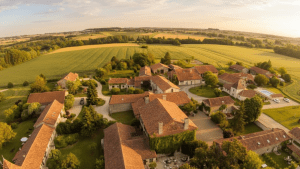
Longeveau is a good example of this distinction in practice. The estate sits on the Charente-Dordogne border on land that was originally a Cognac-producing property. The buildings are genuinely old stone, the grounds are expansive without being manicured into formality, and the feeling across a wedding weekend is one of a place that has absorbed a great deal of life and is comfortable being inhabited by a large group. Mariages à Longeveau tend to have a particular looseness to them that couples describe as one of the things they valued most in retrospect.
Accommodation: The Question That Changes Everything

This is probably the most practically significant difference between the two venue types, and it is the one that gets underweighted in early planning because couples are still focused on the ceremony and the aesthetics.
Many traditional châteaux sleep between fifteen and forty guests within the main building, which is typically a single large house with suites and bedrooms distributed across several floors. This works well for intimate weddings or for the core wedding party. But for larger groups, it means that a significant portion of the guests are staying elsewhere, arriving from different hotels for the day and dispersing at the end of the evening. The wedding exists as a series of formal events rather than a continuous shared experience.
A private estate configured with multiple cottages or gîtes changes this fundamentally. When guests are spread across a cluster of self-contained cottages on the same property, everyone has their own space and their own privacy, but the social life of the wedding weekend exists in the shared outdoor areas, the bar, the restaurant and the grounds. Arrivals happen gradually over the course of an afternoon. The morning after the wedding has a different quality entirely, because the group is still together rather than already checking out.
Longeveau has 32 stone cottages sleeping between two and ten guests, which means a much larger wedding party can be housed entirely on site than a traditional single-building château could accommodate. The couple can invite more people without forcing anyone into a hotel twenty minutes down the road, and the coherence of the weekend as an experience is considerably stronger as a result.
Vendor Freedom vs Venue-Managed Services

One of the practical questions that matters a great deal once planning gets serious is how much control you actually have over the suppliers you work with. This varies enormously between venues, and the distinction between château and private estate does not map perfectly onto it, but there are patterns worth understanding.
Many formal château venues, particularly those that operate as dedicated wedding businesses, have preferred or mandatory supplier lists. Catering may be in-house or contracted to a single provider. The bar may be run by the venue. Décor suppliers may need to be approved. In some cases this is genuinely useful, particularly for couples who do not have local knowledge and want the reassurance of a coordinated package. In other cases it limits flexibility and adds cost in ways that are not immediately obvious when comparing headline venue hire prices.
Many private estates, particularly those that have grown into wedding hosting from a family property background rather than a purpose-built commercial operation, offer more latitude. The catering brief may be open to outside caterers. The décor suppliers are typically the couple’s choice. The bar may operate with no corkage restrictions. This is not universal, and it is always worth confirming the specifics before signing anything, but it is a meaningful difference for couples who have a clear vision for their day rather than wanting a packaged delivery.
Noise curfews are another area where venues differ significantly. Many properties in France, including some châteaux, operate outdoor music curfews around eleven at night as a condition of their operating permissions or out of consideration for local residents. Private estates in genuinely rural locations are often in a better position to offer more flexibility here, though this again depends on the specific property and its relationship with the surrounding area. It is always worth asking directly rather than assuming.
The Price Question
Pricing for both types of venue varies so widely that direct comparisons are almost meaningless without specific quotes. What is worth understanding is the structure of the costs rather than the headline figures.
Traditional château venues often publish a venue hire fee that covers the building, the grounds and basic facilities for a defined period. Catering, accommodation, suppliers and additional services are typically quoted separately, and the final total for a fully serviced wedding weekend can climb considerably beyond the initial hire cost depending on what is included and what is added on.
Private estate venues that include cottages with the hire price present the costs differently. The accommodation is bundled into the overall hire rather than priced per room per night, which can make the total spend look higher at first glance but represents better value once you account for what would otherwise be spent on hotel rooms across the group. The catering cost depends on whether the venue has its own restaurant or whether you bring in outside suppliers, but either way the cost structure tends to be more transparent.
The key question to ask any venue is what the total realistic cost looks like for your specific group size, duration and requirements, not just what the venue hire fee is. That number gives you a much more accurate basis for comparison than any published price list.
Which Type of Venue Actually Suits Which Wedding?

The most useful way to frame this decision is not château versus estate but rather: what is the shape of the wedding you actually want?
If you want grandeur as a core part of the aesthetic, a formal ceremony in a room with genuine architectural drama, and a celebration that feels palatial and theatrical in the best sense, a traditional château delivers that in a way a working estate simply cannot. There are extraordinary châteaux in south-west France and across the country that provide exactly this experience, and for the right couple they are genuinely the right choice.
If you want a celebration that feels more like an extended stay in a beautiful place than a formal event series, where the group coheres across several days rather than assembling for specific moments, and where the atmosphere is warm and residential rather than grand and ceremonial, a private estate wedding in France offers something that is very difficult to replicate in a single-building château setting.
For couples thinking seriously about the Dordogne and Charente region, the earlier post on what makes this area worth considering for a destination wedding in the Dordogne goes into more detail on why the region itself is part of the appeal. And for a more detailed picture of what the experience of a manor estate wedding actually looks and feels like from the inside, the post on what a French manor house wedding actually feels like covers that in full.
The Case for an Estate Like Longeveau

Longeveau sits in its own category in the sense that it is large enough to feel genuinely substantial but deliberately not formal in the way a grand château is. The former Cognac estate has the stone buildings, the grounds and the sense of age that makes this part of France so compelling as a backdrop, without the performative grandeur that can make some château weddings feel slightly pressured.
The scale of the stone cottage accommodation means it suits groups that want to actually live in the same place for the duration rather than simply visiting a beautiful venue for a day. The bar, restaurant, golf course, tennis courts and pools mean the weekend around the wedding has real content rather than empty time between formal events. And the location, five minutes from Aubeterre-sur-Dronne and within easy reach of some of the most beautiful countryside in France’s most beautiful villages{target=”_blank”} region, gives guests who want to explore something genuinely worth exploring.
If this sounds like the right shape for your wedding, the team at Longeveau are very happy to talk through the specifics. Get in touch with the details of your group and what you’re looking for, and the conversation can go from there.