Five minutes from Longeveau, down a lane that drops through woodland toward the valley, the village of Aubeterre-sur-Dronne sits perched above a long curve of the River Dronne like something from a painting. It has been officially listed as one of the most beautiful villages in France since 1993, and it was voted the French people’s favourite village in 2020. Neither of those things comes as a surprise once you have walked its streets. What might surprise you is how much there is to do in a settlement of around four hundred people and how little of it feels rushed or curated for tourism.
This guide covers the main things to see, where to eat and drink, what to do down by the river, and how long a proper visit actually takes. The short answer to the last question is that a half-day gives you the essentials, and a full day gives you the pleasure of not hurrying.
Start at Place Trarieux
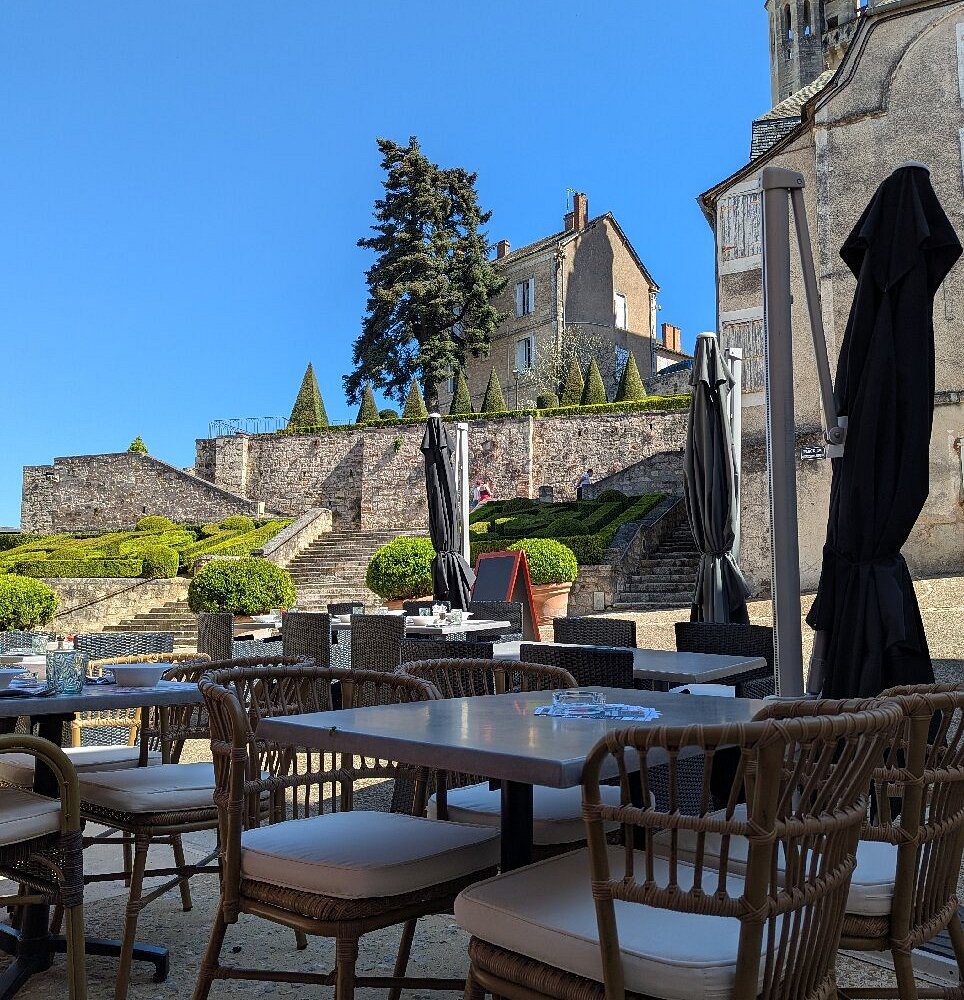
Almost every visit to Aubeterre begins at Place Ludovic Trarieux, the main square named after a local politician and founder of the French Human Rights League who was born here in the nineteenth century. It is a genuinely lovely square, shaded in summer by ancient lime trees, ringed by café terraces and a handful of small restaurants, and overlooked from above by the remains of the old château. There is usually a good hour to be spent here before you have even looked at anything else, particularly if you arrive in time for a coffee and something from one of the boulangeries nearby.
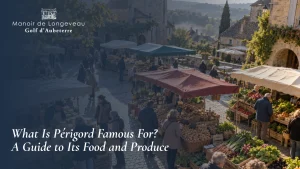
The square is at its most animated on Sunday mornings when the weekly market takes over. If you can arrange your visit around it, the Sunday market is worth the trip on its own. Local producers bring vegetables, cheeses, honey, walnut oil from the Périgord, and seasonal specialities that shift through the year. On the first Sunday of each summer month, local artists set up stalls as well, and the square takes on a particularly easy, unhurried quality.
From Place Trarieux, the village unfolds in two directions. The streets climbing above the square lead up through tighter, steeper lanes toward the upper village and the views. The streets dropping below lead down toward the underground church, the River Dronne and the beach. Most people find they end up covering both without really meaning to.
The Underground Church of Saint-Jean
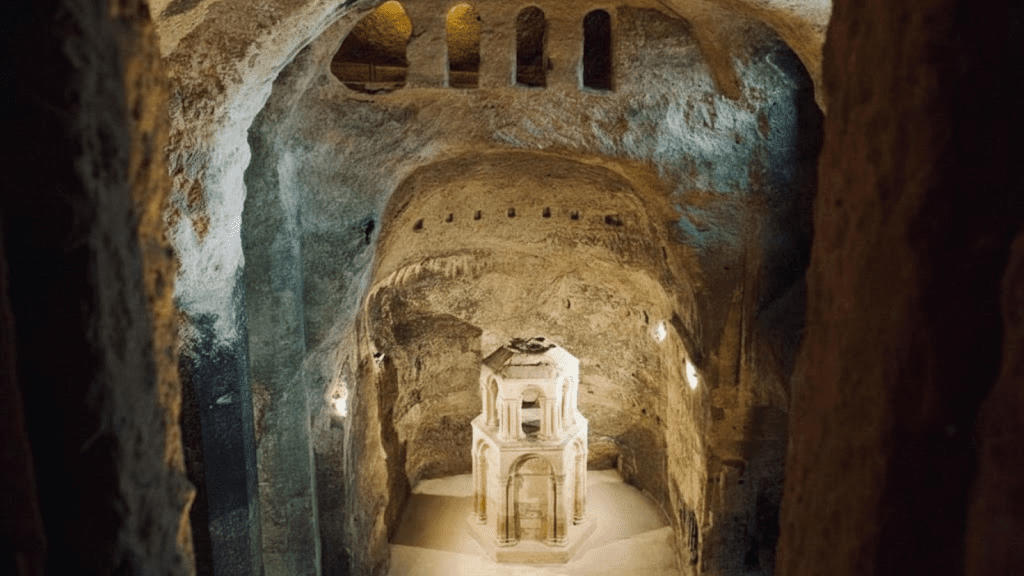
If there is one thing in Aubeterre-sur-Dronne that visitors remember for the rest of their lives, it is the Église Souterraine Saint-Jean. It is not an exaggeration to say it is one of the most extraordinary buildings in France, and it is the reason many people make the journey here specifically.
The church is carved entirely from a single limestone cliff. Not built against it, not partially excavated from it, but hewn completely from the rock, a process that began in the seventh century and was substantially expanded by Benedictine monks in the twelfth. The interior rises to twenty metres at its highest point, making it the tallest monolithic church in Europe. Standing inside it for the first time, particularly when your eyes adjust from the brightness of the village outside, tends to produce a particular kind of silence in people. It is cool even in the height of summer, which is both a practical blessing and an atmospheric one.
The church contains a necropolis with around 160 stone coffins carved directly from the floor, galleries cut eighteen metres into the rock above the nave, and a relic pit that once held a fragment brought back from the Holy Sepulchre in Jerusalem. It served as a stop on the pilgrimage route to Santiago de Compostela in the Middle Ages, and something of that weight of passage still settles over it.
Entry costs a few euros, and the church is open year-round, though hours shift between seasons, so it is worth checking before you go. In July and August it also hosts the Nuits Musicales festival, a series of classical and folk concerts held inside the church itself. The acoustics are, predictably, remarkable.
Allow at least forty-five minutes here. Many people find they want longer.
The Streets, the Shops and the Church of Saint-Jacques
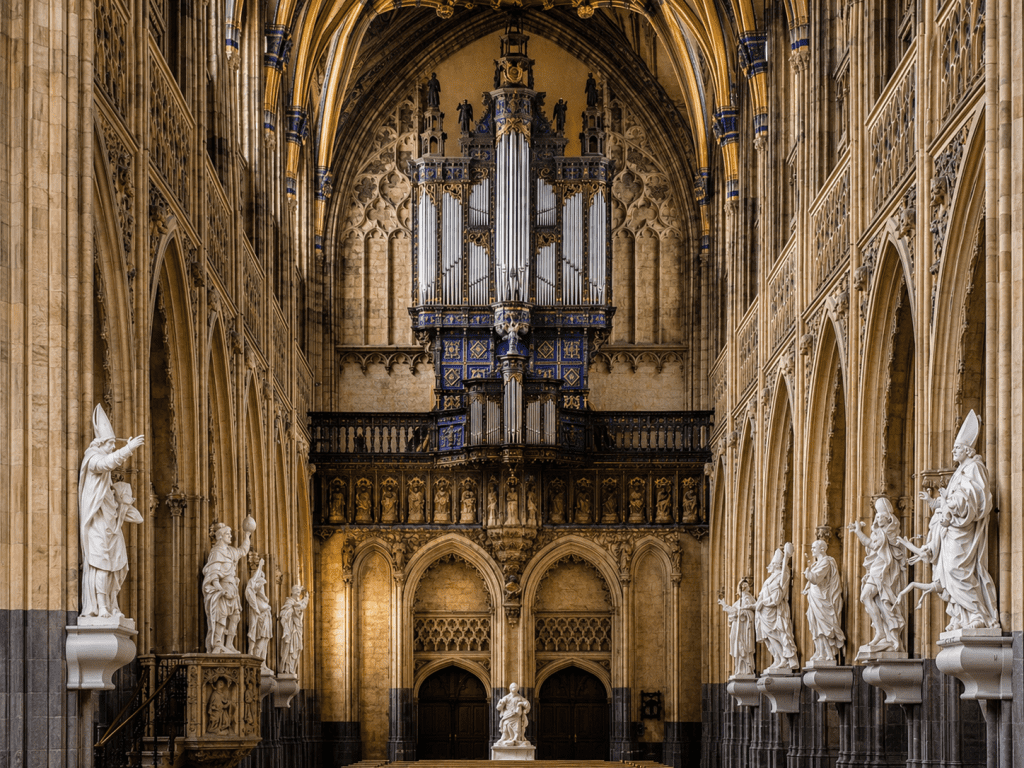
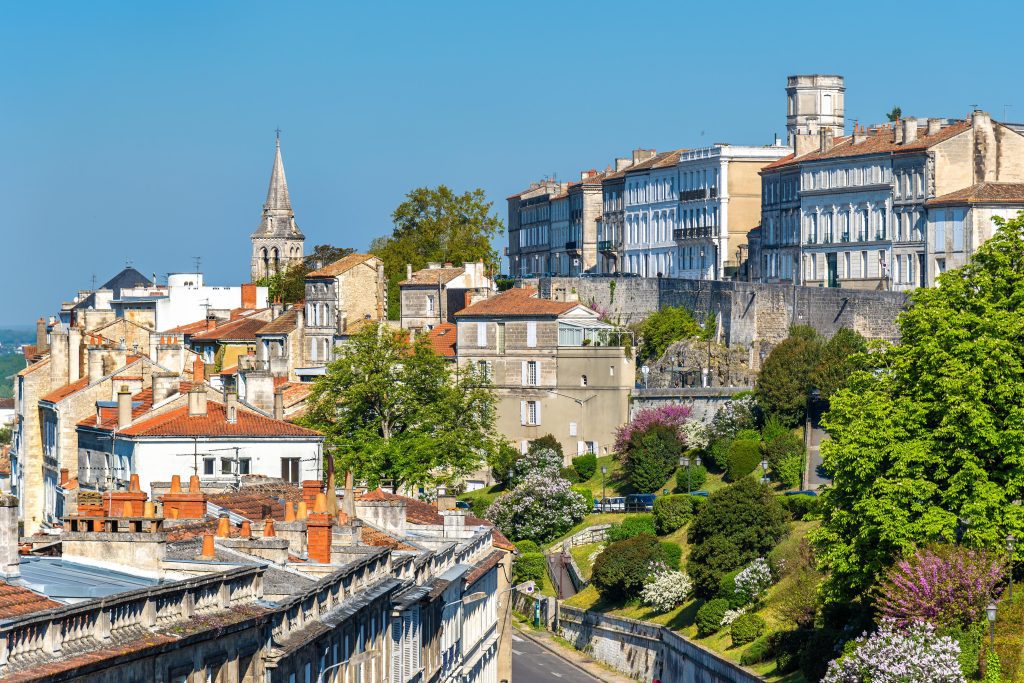
Once you have emerged from the underground church, the obvious thing to do is let the village take you where it will. Aubeterre is built in the shape of a natural amphitheatre, its white limestone houses stacked above each other with hanging balconies draped in flowers through the warmer months. The streets are narrow, uneven, and entirely suited to the pace of a slow afternoon.
The village has a genuine concentration of independent artisans, which makes browsing here feel more interesting than the gift shop circuit of more heavily touristed places. There are potters and ceramicists, leatherworkers, painters and jewellers, most of them working from small premises you could easily walk past without noticing the first time. The Potters’ Festival held during European Heritage Days each September is particularly good if your timing allows for it.
The Romanesque Church of Saint-Jacques stands in the upper part of the village and is worth a stop for its façade alone. The carved stonework around the portal is some of the finest Romanesque work in the Charente, and the church sits on one of the traditional pilgrim routes toward Compostela. It is a quieter experience than the underground church, but no less beautiful in its own way.
From the upper village, the views across the valley of the Dronne are the sort that make people stop walking mid-sentence. The river loops around the base of the village below, and on a clear summer afternoon the light on the surrounding farmland and woodland makes the whole scene look deeply, improbably peaceful.
The River, the Beach and the Afternoon
At the foot of the village, where the limestone gives way to the flat meadows of the Dronne valley, the river runs wide, shallow and clear. There is a sandy beach here that has been a gathering point for families and walkers for as long as anyone can remember. In summer it is supervised for swimming and has all the easy, unorganised charm of a French riverbank at its best: children in the water, people reading in the shade of the poplars, and the occasional canoe drifting past.
The canoeing and kayaking club at the base of the village rents boats through the summer season and offers trips along the Dronne at your own pace, either for a short stretch or a longer journey downstream. The river is slow and gentle at this point, which makes it perfectly manageable for families with children or people who have not been in a canoe since school.
The leisure area beside the river also has tennis courts, a pétanque pitch, a children’s playground and a sandpit volleyball court. It is the kind of place that invites you to extend what you planned as a short stop into a full afternoon without much resistance.
There is a riverside restaurant down here as well, a pleasant option for lunch with a view of the water if the square fills up in peak summer weeks. The crêperie in the village itself is another consistently good option for something lighter in the middle of the day.
Where to Eat and Drink
The square at Place Trarieux is the obvious centre of gravity for eating and drinking, with several café terraces and restaurants that do reliable French cooking at sensible prices. In summer the competition for tables on a warm evening can be genuine, so arriving early or booking ahead for dinner is worth doing if you have a preference for a particular spot.
The village is also a good place to pick up provisions if you are self-catering nearby. The local charcuterie, cheese and bread available through the market and small shops are excellent, and a picnic by the river with things bought in the village has very little wrong with it as a way to spend a lunchtime.
The Charente-Dordogne border means you are in a region where the food cultures of two of France’s great gastronomic areas overlap. Foie gras, duck confit, walnuts, local mushrooms and Pineau des Charentes all appear alongside each other on menus in this area. Cognac country is nearby, and several producers within a short drive of Aubeterre welcome visitors for tastings, including Château des Plassons just ten minutes away, which offers free visits to the cellars and distillery.
How Long Do You Actually Need?
A focused visit covering the underground church, the square, the main streets and a coffee takes around two to three hours. For most visitors, that feels a little brisk. A proper half-day, arriving mid-morning and leaving after lunch, lets you do everything without rushing and have a comfortable sit-down in the square in between.
If you add the river and an hour on the beach or in the water, you are into a full day without any difficulty. In July and August, when the village is at its most lively and the market is running, there is genuinely enough to fill a long, easy day. Aubeterre is also well-placed as a base for exploring a little further. Ribérac, thirty minutes to the south-east, has one of the best Friday markets in the Dordogne. Brantôme, often called the Venice of the Périgord, is about fifty minutes away. The things to do in the wider area from Longeveau cover both if you are building an itinerary.
Whether you are visiting as a guest staying at Longeveau or arriving from further afield, Aubeterre is the kind of place that earns its reputation quietly. It does not need to announce itself. You notice it after you have left, when you find yourself describing it to someone else and realising you are underselling it.