The Dronne is not the kind of river that announces itself. It does not have rapids or drama or the sort of scenery that ends up on postcards. What it has is something quieter and, for many people, considerably better: clear, slow water through unspoilt valley meadows, poplar trees leaning over both banks, and the kind of absolute stillness that is only really possible when there are no roads in sight and no engine noise within earshot. For anyone staying at Longeveau, it is five minutes from the front gate.
Canoeing the Dronne River from Aubeterre-sur-Dronne is one of those activities that tends to look like a pleasant afternoon in the itinerary and ends up being the thing people talk about most when they get home. This guide covers what the river is actually like to paddle, how hiring a boat works, which routes suit different groups, and what you are likely to see along the way.
What the Dronne Is Actually Like

The Dronne rises in the Haute-Vienne and flows west for around 200 kilometres before joining the Isle near Coutras. By the time it reaches Aubeterre, it has settled into the steady, unhurried character it keeps for most of its lower course. The riverbed is shallow in places and clearly visible through the water, pale pebbles and gravel shifting with the light. In summer the surface is often perfectly still between the gentle bends, occasionally broken by the rise of a trout or the dart of a water vole along the bank.
The current is gentle but present. You do not need to paddle constantly to make progress, which is part of what makes it so suitable for families and people who are not habitual paddlers. Most of the river between Aubeterre and the surrounding reaches runs through open agricultural land, with poplar groves lining the banks and occasional overhanging willows providing shade on hot days. There is very little development visible from the water, which gives the whole experience an unusual sense of being genuinely away from things.
The one feature that requires a small amount of effort on most stretches are the weirs. These are low, stone structures that manage water levels and cannot be paddled over. At each one you lift the boat out, carry it a few metres around the side, and put it back in. It takes about five minutes and most weirs have worn, flat paths beside them from years of use. Reviewers consistently mention two or three weirs per trip as something to expect rather than something to worry about.
The water is clean enough to swim in, which matters on a warm July or August afternoon when the temperature reaches thirty-five degrees and the idea of paddling stops being the main priority. Life jackets are provided and required, and most hire operators are relaxed about people stopping, swimming, and taking their time.
Hiring a Canoe from Aubeterre

The canoe and kayak operation at Aubeterre has been running since 1965 and is based at the foot of the village on Route de Riberac, a short walk from the sandy beach at the bottom of the hill. The Aubeterre Canoe-Kayak{target=”_blank”} club offers both accompanied trips and independent hire, with routes of 5, 10, 15 and 50 kilometres available. You do not need to have paddled before, and the team will give a brief demonstration if you ask.
The season runs from May through September. In May, June and September the base is open daily from 10am to 6pm, closed on Mondays. In July and August it operates seven days a week from 10am to 7pm. The pricing is straightforward and represents good value: a two to two-and-a-half hour trip typically costs around twelve euros per boat, and a longer four to five hour trip around fourteen. Life jackets and paddles are included.
The logistics of a one-way trip are handled by the club. You put the boat in at Aubeterre, paddle downstream, and at a pre-arranged time a minibus collects you from your end point and brings you back to your car. This is the standard model for most canoe hire operations along the Dronne and it means you are always paddling with the current rather than against it, which makes a significant practical difference over the course of a few hours.
Canadian canoes, which sit higher and are more stable than flat-bottomed kayaks, are the recommended choice for families with children or people who want a more relaxed experience. They are easier to steer than they look once you have spent twenty minutes on the water.
Which Route to Choose

The choice of route depends primarily on how long you want to be on the water and who is in the group.
The five-kilometre trip from Poltot to Aubeterre is the shortest option and takes around ninety minutes to two hours at a comfortable pace. It is the right choice for young children, for people who want to try canoeing without committing to a longer stretch, or for days when the weather is very hot and the appeal of being on the water in the afternoon is as much about swimming as paddling. The scenery is representative of the whole river without any of the sections feeling rushed.
The ten-kilometre route extends the experience into a genuine half-day. At the unhurried pace most people naturally settle into on the Dronne, this takes around three to four hours including stops. Reviewers often note that the indicated times are optimistic and the actual time on the water tends to be longer, which is not a complaint so much as an observation about how easy it is to lose track of time when the river is this quiet and the light is good.
The fifteen-kilometre option makes a full day of it and is the route for people who want the river to be the main event rather than one activity among several. It takes in a wider variety of the Dronne’s character, more of the open valley meadows, more of the poplar woodland, and a better chance of the kind of undisturbed wildlife encounters that only happen when you have been on the water long enough for the river to forget you are there.
The fifty-kilometre route is a multi-day journey and a different proposition altogether. It requires advance planning and is suited to people who are experienced paddlers and want an extended trip through the valley. Worth enquiring about directly with the club if this is something you are considering.
What You Will See Along the Way

The Dronne between Aubeterre and the surrounding reaches is under various environmental protections, and the quality of the habitat along the banks reflects this. The water is clear enough in most stretches to see the riverbed clearly, and trout and roach are visible in the deeper pools. Pike lurk in the slower, shadowed sections close to the bank.
Kingfishers are the bird most people hope to see and, on a quiet day, the most likely to appear. They are heard before they are spotted: a sharp, staccato call that seems too loud for something so small, then a flash of electric blue and copper low over the water, moving faster than you expect. They tend to perch on low overhanging branches between flights and, if you come around a bend quietly, there is a reasonable chance of a close sighting before they move on. The grey heron is less dramatic but no less striking, standing motionless in the shallows at the edge of the channel, completely still until something moves beneath the surface.
The white flowers of water crowsfoot spread across the slower sections of river in early summer, and the bankside vegetation through July and August is full of dragonflies and damselflies moving between the reeds. The demoiselle, with its iridescent blue-green wings, is particularly common on this stretch and tends to drift across the water surface in pairs. On warm evenings the whole river seems to shimmer with them.
In terms of human traffic, the Dronne is quiet. You may share the water with a small number of other canoes from the same hire base, and occasionally with local fishermen casting from the bank, but there are long stretches where you will have the river entirely to yourselves. This is part of what sets it apart from more heavily visited canoeing rivers elsewhere in France.
Practical Things Worth Knowing
Go early in the day in July and August. By mid-morning the launch area can be busy, and an early start gets you on the river before the heat builds and before the most popular routes fill up. The team at the club are relaxed and helpful, and most of the younger staff speak good English, which makes the booking and briefing process straightforward for non-French speakers.
Wear clothes you are comfortable getting wet in, because you will get wet. A change of clothes and a towel in a dry bag or left in the car is worth doing. Sunscreen is essential in summer and often underestimated on the water, where the reflection off the surface adds to the exposure. A hat with a brim is more useful than it appears when you are paddling into the afternoon sun.
There is no particular skill requirement for the shorter routes. If you can sit in a boat and follow basic steering instructions, you will manage fine. The weir portages are the only moments that require any physical effort, and they are brief. Children from around seven years upwards generally manage the whole trip with no difficulty at all.
If you are combining canoeing with a visit to Aubeterre-sur-Dronne itself, a morning on the river followed by lunch in the square and a visit to the underground church makes a well-paced day with very little that needs planning in advance. The canoe base is at the bottom of the hill below the village, so it is a natural starting or finishing point for a full day out.
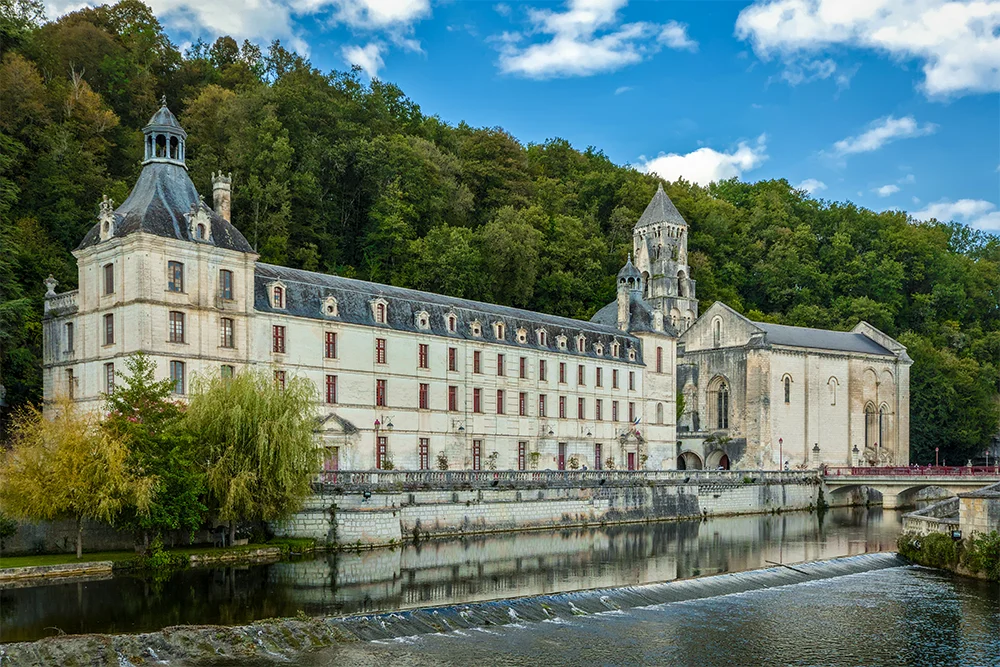
For wider ideas about what to do in the surrounding area during your stay, the Longeveau places-to-visit page covers the region across the Charente-Dordogne border in more detail. The Dronne can also be paddled from other points along its course, notably from Brantôme in the Dordogne about fifty minutes to the south-east, where the river runs through the town itself and around its famous island abbey. Both are worth a day if you are in the area for a week or more.
If you have questions about getting to the river, what to combine it with, or anything else about the area, get in touch and the team at Longeveau will point you in the right direction.
The Dronne asks very little of you. You point the boat downstream, let the current do most of the work, and pay attention to what the river shows you. Most people come back from it quieter and better rested than when they set off, which is exactly what a good afternoon on the water is supposed to do. If you are planning a stay in the area and want to know more about what is nearby, the team at Longeveau is always happy to help with recommendations. Just get in touch.
Manoir de Longeveau — 35 self-catering gîtes with heated pools, on-site golf and tennis, minutes from Aubeterre-sur-Dronne.
Browse the gîtes