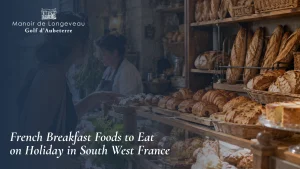
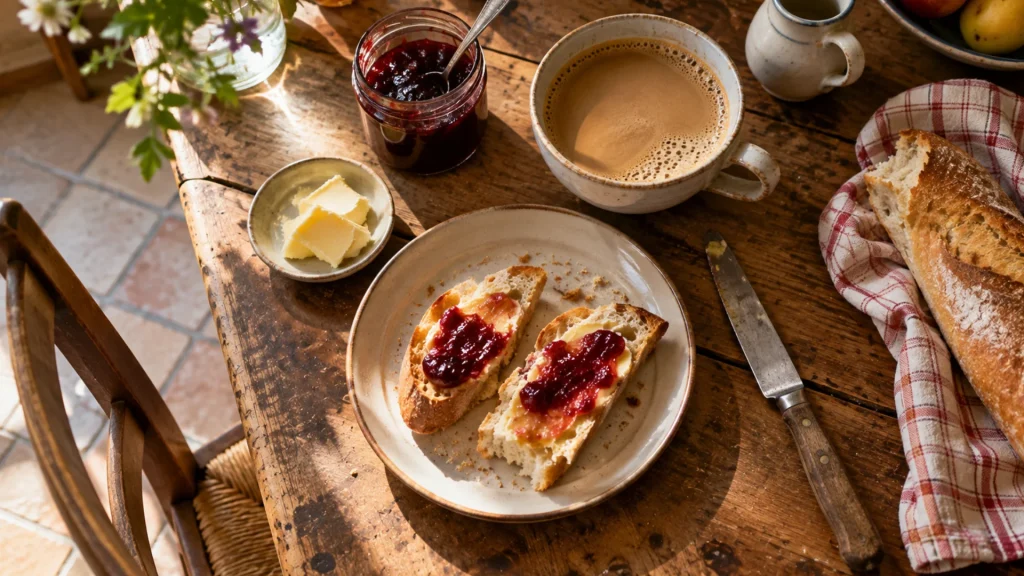
The French breakfast foods worth eating on holiday are a buttery croissant or chocolate pastry from the boulangerie (the bakery), a tartine of baguette with butter and jam, and a coffee to go with them.
These are the staples of a traditional French breakfast, and none of it needs cooking.
Here is what most visitors miss. Cafés serve breakfast too, especially in cities and tourist areas.
The everyday version, though, is carried home from the bakery in a paper bag and eaten in your own kitchen. And in south west France, the chocolate pastry in that bag goes by a different name from the one most visitors know.
What do the French eat for breakfast?
A traditional French breakfast is small, sweet and built around bread, and pastries are an occasional extra. If you’re used to a full cooked breakfast, it may seem light. Breakfast is the most restrained meal in French cuisine: a few minutes, a hot drink and something sweet, then a long lunch to look forward to.
Croissants are not necessarily an everyday breakfast. Many French people eat them as a weekend treat. On a weekday, a typical French breakfast at home is bread and jam, or just a coffee on the way out of the door. On holiday, you get to eat the Sunday version every day.
For the butter on your tartine, look for Charentes-Poitou butter, a protected (AOP) local butter from the Charente area with notes of fresh cream and hazelnut.
What do the French drink in the morning?
Coffee comes first, and café au lait, coffee with hot milk, is the traditional breakfast drink, though espresso and other coffee styles are common too. It is sometimes drunk from a wide bowl so there is room to dunk a tartine. Hot chocolate is the other regular and the safe bet for children. Tea is also available, with or without milk. Orange juice, ideally fresh-squeezed, is on offer almost everywhere.
What are the best French breakfast pastries?
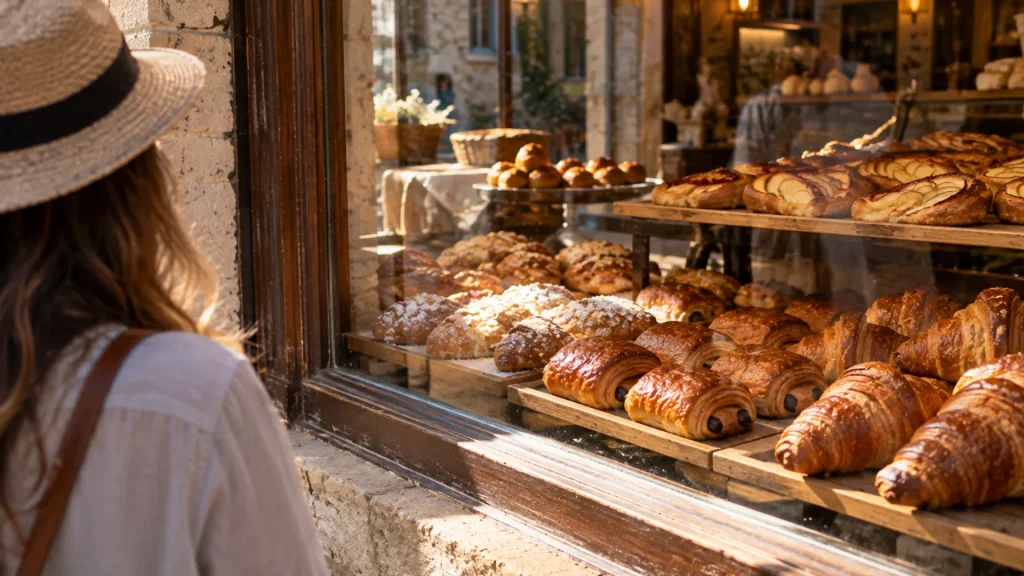
The best French breakfast pastries are the croissant, pain au chocolat, pain aux raisins, brioche and chausson aux pommes. Together they are called viennoiseries, the buttery, flaky pastries that fill the baker’s window beside the bread.
Start with the croissant, and ask for one au beurre, made with butter. A fresh croissant should crackle and shed flakes.
Next comes the pain au chocolat, a rectangle of flaky dough around one or two bars of dark chocolate. For something spiralled, try the pain aux raisins, pastry rolled with custard and raisins. The brioche is a soft, lightly sweetened bread, gentle enough for small children, and the chausson aux pommes is the fruit option, a half-moon of puff pastry filled with apple compote.
Around the Charente, you may also meet the galette charentaise, a buttery regional cake sometimes flavoured with angelica and typically served warm with a coffee.
Is a chocolatine the same as a pain au chocolat?
Yes. It’s one pastry with two names, and the name you hear depends largely on the region. In Bordeaux and much of south west France, it is a chocolatine, as the French national tourism board’s breakfast guide also notes. Across most of the rest of the country, it is a pain au chocolat.
The argument has been loud enough to be taken to the French parliament, and locals in the south west can be touchy about it.
Say chocolatine in Bordeaux and you’ll sound local. Near the edge of that zone, usage can mix, so read the label in the window and copy it.
How do the French eat a croissant?
Plain, and in pieces. Most French people eat a croissant without butter or jam, a piece at a time. Save the dunking for the tartine.
What savoury French breakfast foods are worth trying?
If you want something savoury, start with a croque monsieur, a galette complète or œufs cocotte. Savoury is the exception, though: these are brunch and café dishes more than everyday breakfasts.
The croque monsieur is a toasted ham and cheese sandwich grilled with a creamy sauce on top. Add an egg and it becomes a croque madame. The galette complète comes from Brittany rather than the south west, but crêperies serve it well beyond, a buckwheat pancake folded around ham, egg and cheese.
For something gentler, try œufs cocotte: eggs baked in a ramekin with cream, butter and herbs, soft enough to dip a baguette into.
Two sweet dishes also turn up alongside the savoury ones. Sweet crêpes, folded around sugar or lemon and dusted with icing sugar, are the safest choice for anyone unsure. Pain perdu is what English speakers call French toast: stale bread soaked in egg and milk, then fried. The name means lost bread, because the dish rescues bread that would otherwise be thrown away.
Do the French eat eggs for breakfast?
Not routinely. A Parisian café will offer a soft-boiled egg, a fried egg or scrambled eggs next to the pastries, and omelettes turn up at brunch.
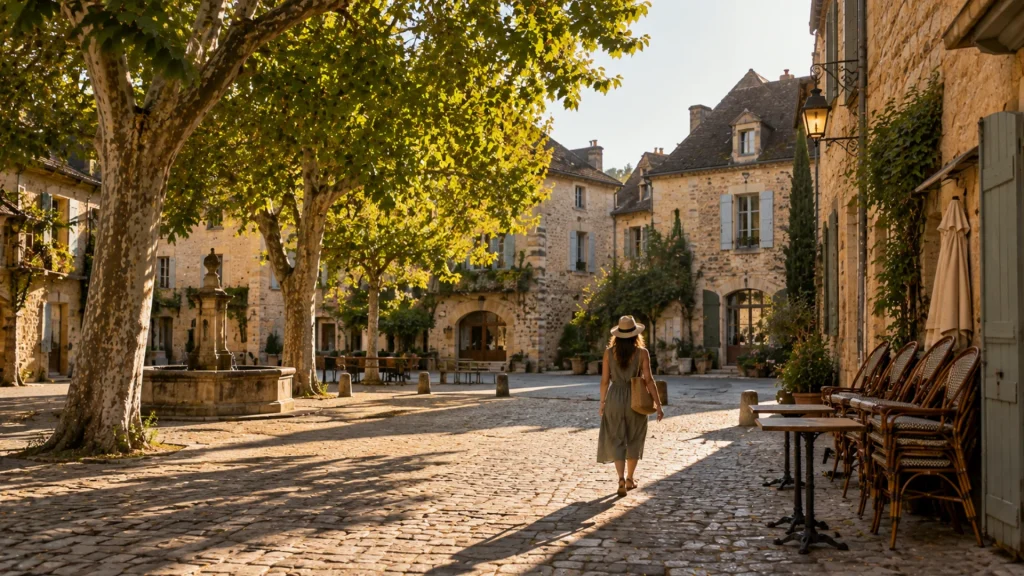
What are common French breakfast foods called in French?
A French breakfast is called le petit déjeuner, or le p’tit déj in everyday speech. It means little lunch. To say you’re having it, use prendre (to take): je prends le petit-déjeuner, which means I’m having breakfast. Be careful with déjeuner on its own: in France it means lunch, though in Belgium, Switzerland and Quebec it means breakfast.
| In French | In English |
| un croissant au beurre | butter croissant |
| un pain au chocolat or une chocolatine | chocolate pastry |
| une tartine | slice of baguette with butter and jam |
| un pain aux raisins | custard and raisin spiral |
| une brioche | soft, sweet loaf |
| un chausson aux pommes | apple turnover |
| un chocolat chaud | hot chocolate |
| un jus d’orange pressé | fresh orange juice |
| un œuf à la coque | soft-boiled egg |
A pain aux raisins is often called an escargot. Ask for pressé if you want juice squeezed fresh. An œuf à la coque is often eaten with a spoon.
What time do the French eat breakfast?
Early. Out and about, cafés often serve it from around 7.30am, and some hotels start as early as 6am. It tends to run until around 11am. Times vary a lot from place to place, so check before you walk over.
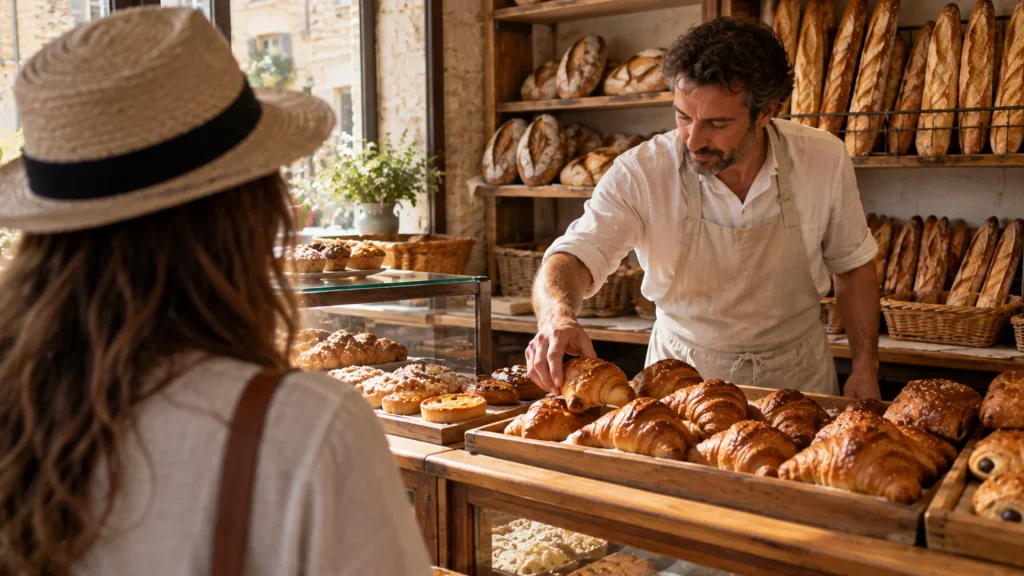
How do you order breakfast in a boulangerie?
Say bonjour as you step in, because the greeting matters more than the order. Then ask politely: “Je voudrais un croissant, s’il vous plaît”, which means I would like a croissant, please. Pointing works when the word escapes you.
Most boulangeries open early in the morning, usually from around 7am, and many close one day a week, so check the sign on the door. Look for “Artisan Boulanger” (a craft baker) or “Fait Maison” (homemade) in the window. They mean different things, but both are good signs.
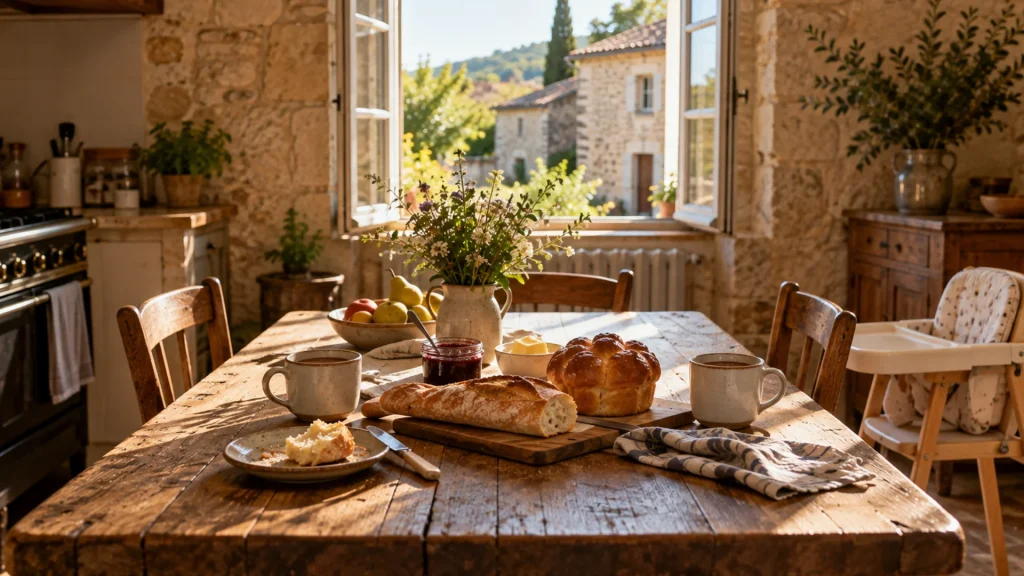
What should families eat for breakfast on holiday?
If you’re wondering what to eat for breakfast in France with children, go for a tartine, a brioche or a pastry, with a hot chocolate alongside. Breakfast from the bakery needs no cooking and no cutlery. The food is soft and sweet, and you eat it with your hands, which is exactly what a tired toddler wants. A hot chocolate goes a long way towards settling a cranky morning.
Hotels call their standard spread “continental”, so a “continental” on the hotel menu is usually the French breakfast you have just read about. A hotel breakfast often includes the baguette, tartines, pastries, juice and a hot drink. A typical buffet often adds cereal, yoghurt and fresh fruit, which helps if someone at the table won’t touch a pastry before nine.
Self-catering skips the buffet entirely. At Manoir de Longeveau, a family-run estate on the Charente and Dordogne border, the self-catering gîtes mean breakfast is whatever you carry back from the baker’s. Children eat at their own pace, nobody has to whisper in a dining room, and a toddler can have a tartine in the kitchen while the grown-ups finish their coffee. Eat the baguette the same day, because it is at its best in the first few hours.
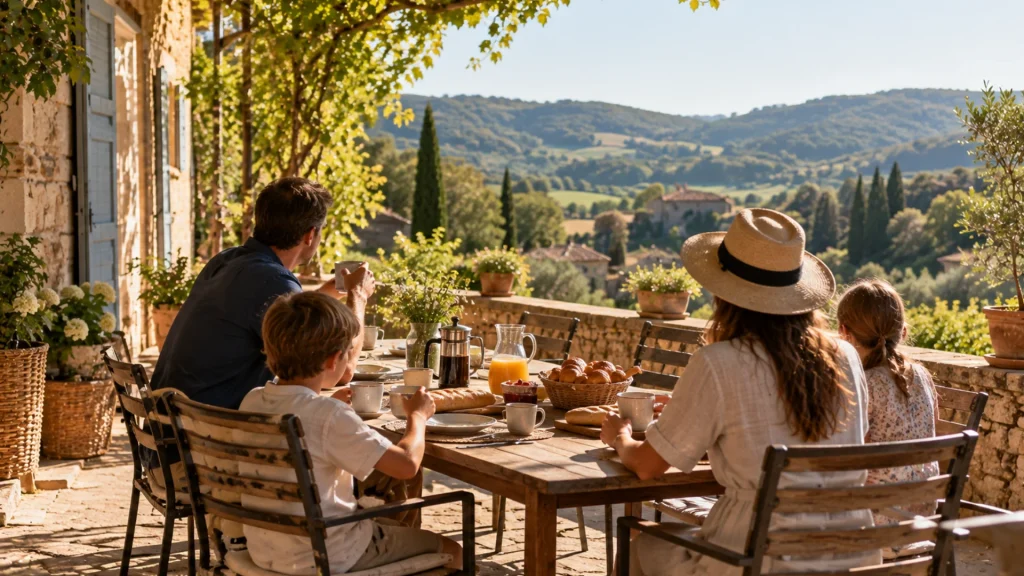
Which French breakfast suits your group?
Make the baker’s run your morning ritual and most groups are covered. If your group leans savoury, save the croque monsieur or an omelette for a late café brunch. If you only try one thing, make it a chocolatine or a pain au chocolat, whichever the label says, eaten warm on your first morning.
Lunch is the meal that needs planning, and our guide to the traditional food of South West France shows which dishes belong where.
The best French breakfast on holiday is the one you walk to.
Manoir de Longeveau — 35 self-catering gîtes with heated pools, on-site golf and tennis, minutes from Aubeterre-sur-Dronne.
Browse the gîtes